How do you get rid of moss on artificial grass?
Pull or scrape out what has rooted, treat the spot with a turf-safe algaecide or oxidizer, then change the conditions that let it grow: more light and airflow, and less organic buildup for it to root into. Moss needs shade, moisture and debris together, so removing one of the three keeps it from returning. TIMELESS Turf Restoration treats shaded strips like this on Grand Strand yards.
Key takeaways
- Moss is a plant rooting into organic buildup, not a film like algae. Pulling it out matters as much as treating it.
- Shade, moisture and debris all have to be present. Remove any one and moss struggles to return.
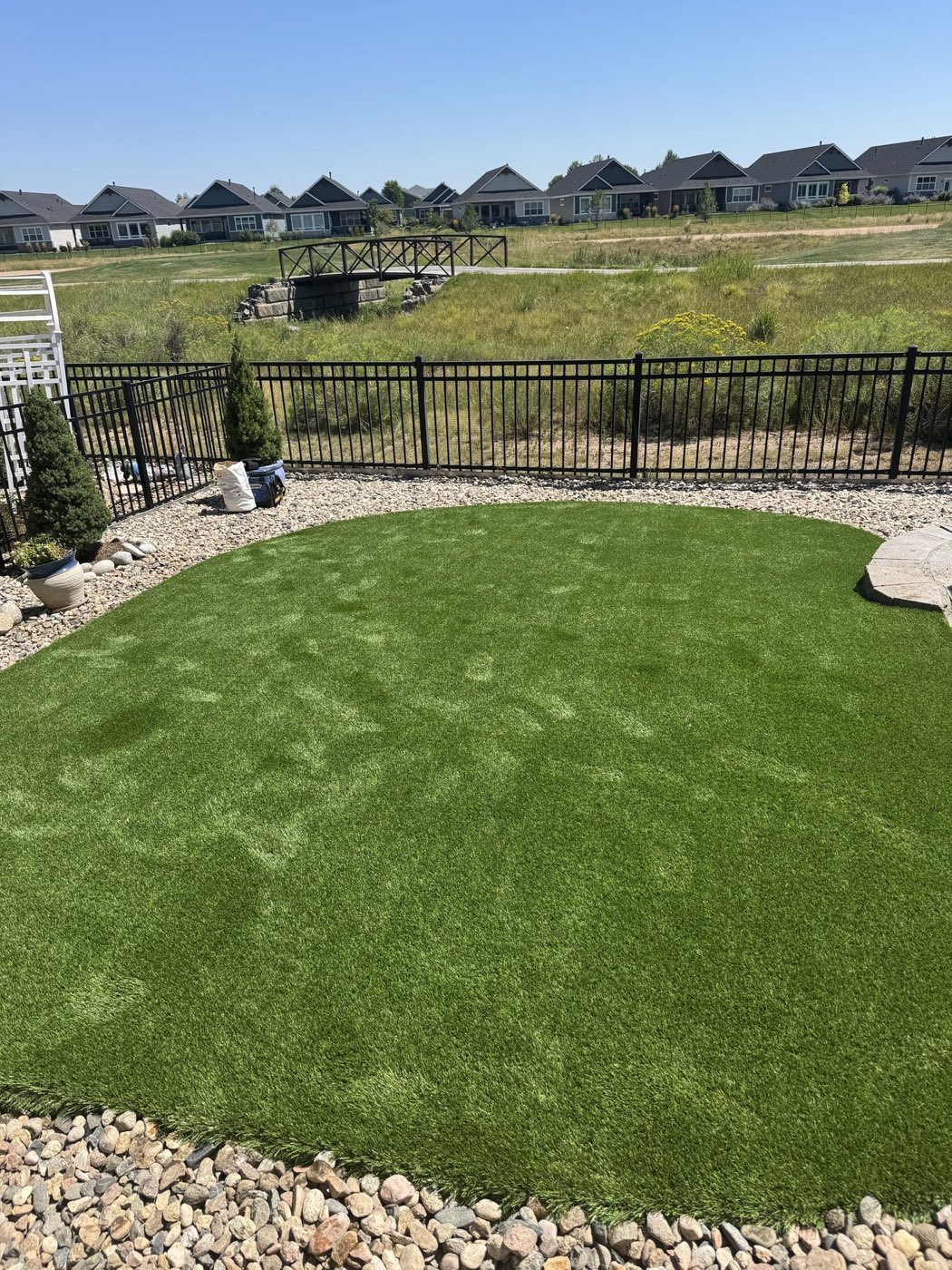
- Fence lines, north-facing walls and the strip under a deck are the spots to check first.
- A wire brush pulls it faster but shreds fibers. Hand-pull or scrape with a plastic tool instead.
Why moss picks these spots
Moss is not algae, even though both show up in the same shaded corners and both get called "the green stuff" by whoever finds it first. Algae is a single-celled organism that forms a thin film on the surface of the fiber and backing. Moss is an actual small plant, and it needs something to root into, not just a wet surface to sit on. On turf, that something is the thin layer of decomposed pollen, leaf litter and dust that builds up in any spot that stays shaded and damp longer than the rest of the yard dries. Pull the moss and leave that layer, and it grows back within a season. Strip the layer along with the moss, and it usually does not.
Pull it out
Wear gloves and work a corner of each clump loose with your fingers or a plastic scraper, then peel it back like a thin patch of carpet. Most moss on turf lifts in a single piece once you find the edge, because it is rooted in the debris layer rather than the backing itself. Work with the grain of the fibers, not across it, so you are not tearing blades along with the moss. A wire brush or metal rake pulls faster but shreds fiber tips and frays the weave underneath, which is worse than the moss. Bag what you pull and carry it off the property; spores left in a pile at the edge of the yard will happily reseed the same strip.
Brian prices it by square foot before any work starts, and every job ends blown clean.
Treat what is left
Once the clumps are out, the spot usually still shows a green tint from spores and residue in the debris layer. Rinse it, then apply a turf-safe algaecide or oxidizer at label dilution and let it dwell for the time the label gives, typically ten to twenty minutes. This is the same product category we use on the algae film that often grows in the same strip, so if you see both, one treatment handles them together. Rinse afterward and brush the area once it dries.
Dry the spot out
Moss needs the shade to stay reliably damp; take away the damp and it stops coming back even where the shade stays. Trim back branches or shrubs low enough that some direct sun and airflow reach the strip for part of the day. Check what a downspout or a low spot in the yard is doing to that corner; a strip still wet an hour after the rest of the yard has dried, in rain that has nothing to do with the shade itself, usually means water is draining onto it or pooling under it, which is worth checking against our water pooling page before you treat the same spot again.
Keep debris from building back up
The debris layer moss roots into is the same layer pollen and leaf litter leave everywhere, it just accumulates faster in a shaded strip because wind does not carry it through and sun does not dry it out. Put that strip on a shorter interval than the rest of the yard: blow and rinse it every couple of weeks rather than monthly, especially through pine pollen season and after the live oaks drop. It is ten extra minutes and it is cheaper than pulling moss again next spring.
Mistakes
- Lawn moss killer. Products made for soil and living grass are not labeled for synthetic fibers and backing, and some leave a residue or a stain. Use a product labeled for artificial turf.
- Chlorine bleach. Kills moss and bleaches the fibers at the same time, and does nothing about the debris layer it rooted into, so it comes back the same color it left in.
- Scraping like you mean it. A firm, angled pass with a plastic scraper lifts moss; a hard, flat one cuts fiber tips.
- Treating the moss and ignoring the shade. Without more light or airflow, you are scheduled for the same job again next spring.
When to call us
A patch or two of moss along a fence line is a DIY afternoon. A yard with moss in several shaded strips, or moss alongside a black or green film that keeps spreading, usually means the organic-buildup treatment needs to go deeper than a hose and a scraper reach. That is our algae and mold removal, included in every Premium Restoration from $299 for up to 500 square feet and $399 for up to 1,000, with power brushing and a full rinse ahead of the treatment so it reaches the backing instead of sitting on top. The coastal maintenance calendar has the shaded-strip check built into the spring and fall rounds.
Free quote, priced by square foot. You approve any add-on before we do it.