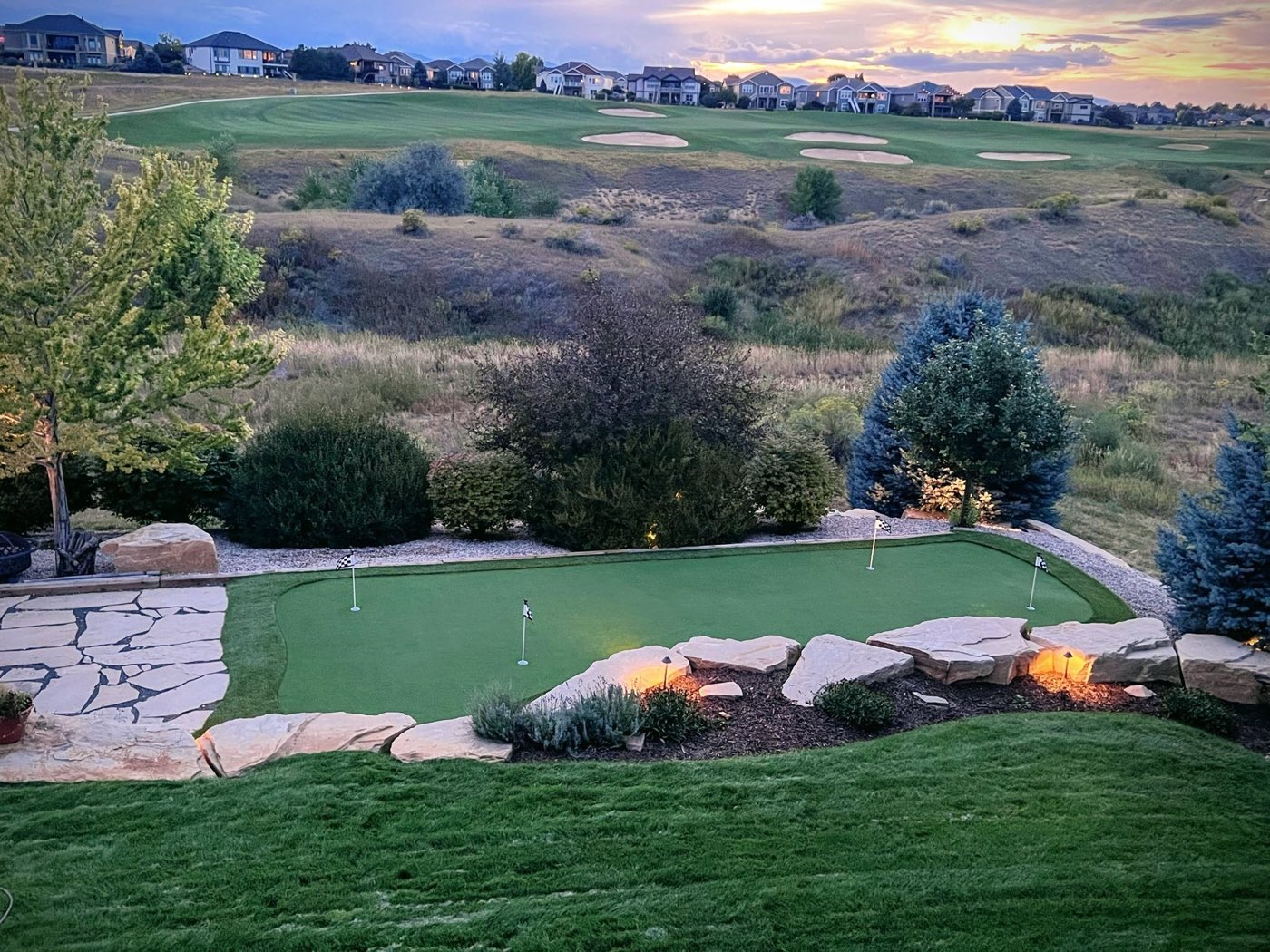

Why does my artificial putting green roll slow and bumpy?
A synthetic putting green rolls slow when debris and pollen have softened the surface and the sand infill has washed thin, and bumpy when sand has migrated unevenly and the surface has not been rolled. Restoring it means clearing and brushing the green, cleaning the fringe and cups, top-dressing with fresh green-grade sand to an even depth, and rolling to compact and true it. TIMELESS Turf Restoration does this across the Grand Strand; Brian has built and maintained putting greens for 13 years.
What sets green speed
On a sand-filled green the ball rolls on the sand as much as on the fibers. Deeper, firmer, more even sand means a faster, truer roll. Anything that softens the sand or makes it uneven slows the green or sends the ball off line: pollen paste, leaf litter, sand washed from the high side to the low, fibers matted where people stand to putt, and the general settling of a green that has not been rolled. On the Grand Strand the pine pollen in March and live-oak drop in April are the two events that do the most damage, and a green under an oak that is not blown off all fall is slow by Christmas.
Bumpy is a different problem from slow
Slow is usually surface contamination and thin sand, and it is fixed by cleaning and top-dressing. Bumpy is sand that has moved or a surface that has never been compacted, and it is fixed by redistributing sand to a consistent depth and rolling in more than one direction. A green can be both. A green that puddles or has a distinct dip is a base problem, and no amount of sand fixes it; that is a rebuild, which we can diagnose and refer.
Brian prices it by square foot before any work starts, and every job ends blown clean.
The restoration
Clear and blow the green, fringe and collar. Brush to lift fibers and loosen contaminated sand. Clean the cups and the fringe. Top-dress with kiln-dried, rounded green sand to depth and brush it in evenly. Roll. Check speed with a consistent-release ball roll and adjust. Walk the seams and edges. That is the putting green restoration, and it is quoted by green size and condition.
Keeping it fast
Blow it off weekly. Brush monthly against the grain. Keep sprinklers off it. Top-dress once a year after pollen season. A green kept that way holds its speed; a green that gets a restoration every spring because it sat under leaves all winter is spending money on neglect.
Free quote, priced by square foot. You approve any add-on before we do it.