How do you clean a synthetic putting green?
Blow debris off on a low setting so you are not scattering the sand top-dressing, brush lightly with a soft groomer brush rather than a stiff push broom, and clean the cups and fringe separately from the putting surface itself. Keep cleaners and heavy rinsing off the green surface. TIMELESS Turf Restoration restores greens with the same light-touch approach across the Grand Strand.
Key takeaways
- Blow on a low setting. A heavy blast scatters the sand top-dressing that controls speed.
- Brush lightly with a soft groomer brush, not the stiff broom you would use on a lawn area.
- Cups need their own cleaning: liners come out, get wiped down, and go back in flush.
- Skip soap and heavy rinsing on the putting surface itself. Save that for the fringe.
Why a green gets treated differently
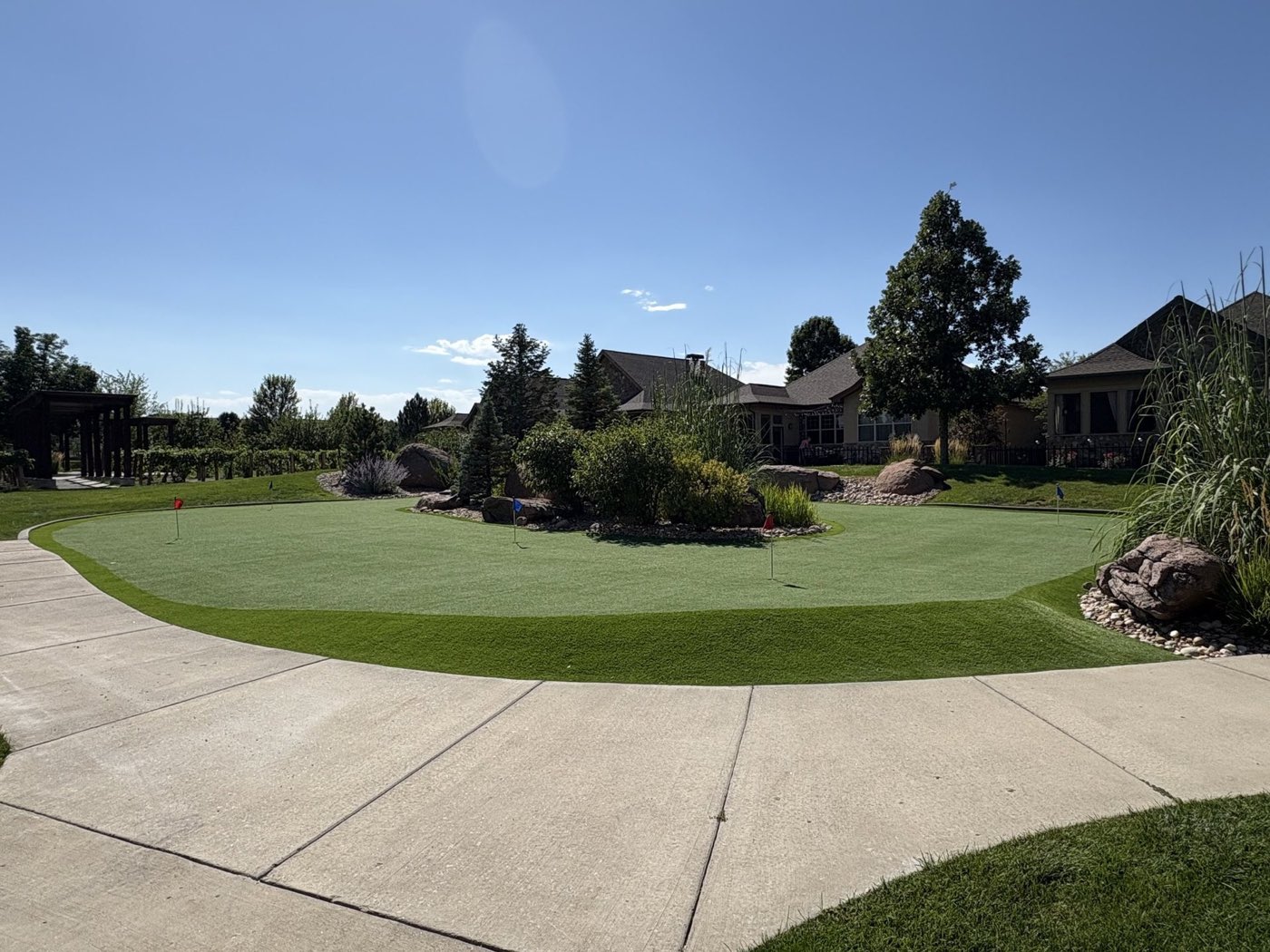
A putting green has a shorter, denser pile than lawn turf and a layer of kiln-dried sand top-dressing brushed into it specifically to control ball roll speed and trueness. Anything that disturbs that sand layer unevenly, a hard brush, a heavy blast of air, a strong hose stream, changes how the ball rolls in that spot even if the turf underneath is unaffected.
Blow first, on low
Clear leaves, pine needles and general debris with a leaf blower on a low or medium setting rather than full power, holding the nozzle a bit further off the surface than you would for a lawn. The goal is moving loose debris without stripping sand off the surface in the process. Work from one edge to the other in the same overlapping pattern you would use anywhere else. A quick blow-off after any windy day is worth more than waiting for visible buildup, since needles and leaves left sitting on a green longer than a day or two start to shade and dampen the surface underneath them.
Brian prices it by square foot before any work starts, and every job ends blown clean.
Brush lightly
A soft-bristle groomer brush or a drag brush made for greens, worked in a light pass rather than the firmer stroke a lawn area gets, since a green's shorter, denser pile does not need the same lifting force and a hard brush can drag sand out of the pile instead of settling it. Brush in more than one direction over a few passes rather than one heavy direction, which also helps true up the surface.
Cups and fringe
Pull the cup liner out every so often and wipe or rinse it clear of dirt, spider webs and clippings blown in from nearby, and check that it sits flush in the ground without rocking or tipping, since a loose cup changes how a putt drops. The fringe, or collar, the slightly taller pile ring around the putting surface, can be cleaned more like regular turf: brushed against the grain and rinsed if it needs it, since it is not carrying the same sand top-dressing the putting surface is. A fringe that has started to mat down along its most-walked edge, where players step on and off the green, responds to the same brushing method covered on our brushing page.
What not to do
- No pressure washer anywhere near the green; it can blast the sand top-dressing out of the pile in stripes.
- No soap or general cleaner on the putting surface, since residue changes how a ball rolls across it even after it looks clean.
- No heavy daily rinsing of the surface itself; repeated saturation can compact the sand unevenly over time.
- Keep cleated or hard-soled shoes off the green during any of this, the same as during play.
When to call us
A green that has gone a season or more without attention, or one that has started rolling slow, bumpy or unpredictable, usually needs the sand top-dressing checked and likely refreshed rather than just cleaned. Our putting green restoration covers that, priced by the same square footage bands as any turf visit, starting at $199, and our top-dressing page covers that part of the job in detail.
Free quote, priced by square foot. You approve any add-on before we do it.