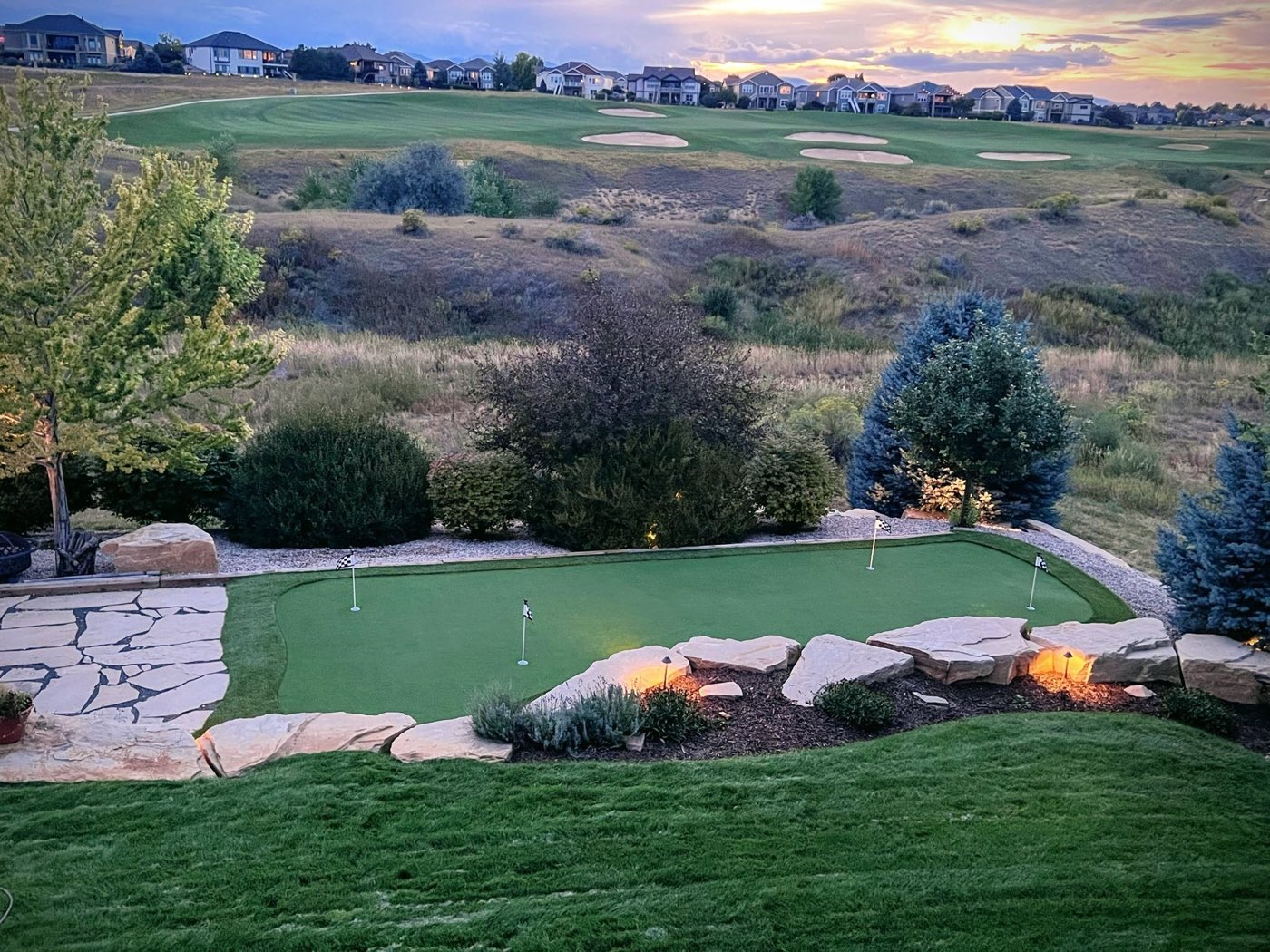

How do you restore a backyard putting green?
A synthetic green is restored by clearing debris, brushing to lift fibers and loosen compacted sand, cleaning the fringe and cups, top-dressing with fresh green sand to the right depth, brushing it in, and rolling to true the surface and set the speed. TIMELESS Turf Restoration does this across the Grand Strand; Brian has built and maintained greens for 13 years.
Every visit includes
- Debris cleared from green, fringe and collar
- Brushed and loosened
- Cups and fringe cleaned
- Green-sand top-dress to depth
- Rolled and speed-checked
- Seam, edge and drainage check
Why greens slow down and go bumpy
Sand washes off the high side and piles on the low, so the ball drifts and the high side goes slow and fuzzy. Leaves and pollen soften the surface, and contaminated sand compacts unevenly, so the roll turns inconsistent.
Quoted by green size and condition · typical backyard greens fall in the Premium bands
The restoration
- Blow and clear. Green, fringe and collar, debris-free.
- Brush. Lift fibers, loosen compacted sand.
- Clean. Clear cups; clean the fringe like a lawn.
- Top-dress. Fresh green sand, even depth, brushed in.
- Roll. Compact and true it, more than one direction.
- Check speed. Adjust sand and rolling until it runs right.
What else we check
Seams, shifted cups, lifted edges and drainage all get checked. A green that puddles after rain has a base problem no amount of sand fixes — we'll say so, and since our sister company builds greens, we know what a proper fix costs.
Keeping it fast
- Blow leaves and needles off weekly — that's most of it
- Brush monthly to hold speed through the season
- Under live oaks, plan an annual spring restoration
Free quote, priced by square foot before any work starts.