What causes black patches on artificial grass?
Black or dark green patches on artificial grass are algae and mold growing on organic buildup, mainly pollen, dust and leaf litter, that has settled into infill that stays damp and shaded. They are removed by power-brushing the film loose, rinsing the organic layer out of the infill, applying a turf-safe algaecide or oxidizer rather than bleach, and sanitizing. They stay gone if the area is kept clear of debris and drains. TIMELESS Turf Restoration treats algae across the Grand Strand as part of a Premium Restoration.
What it is and where it grows
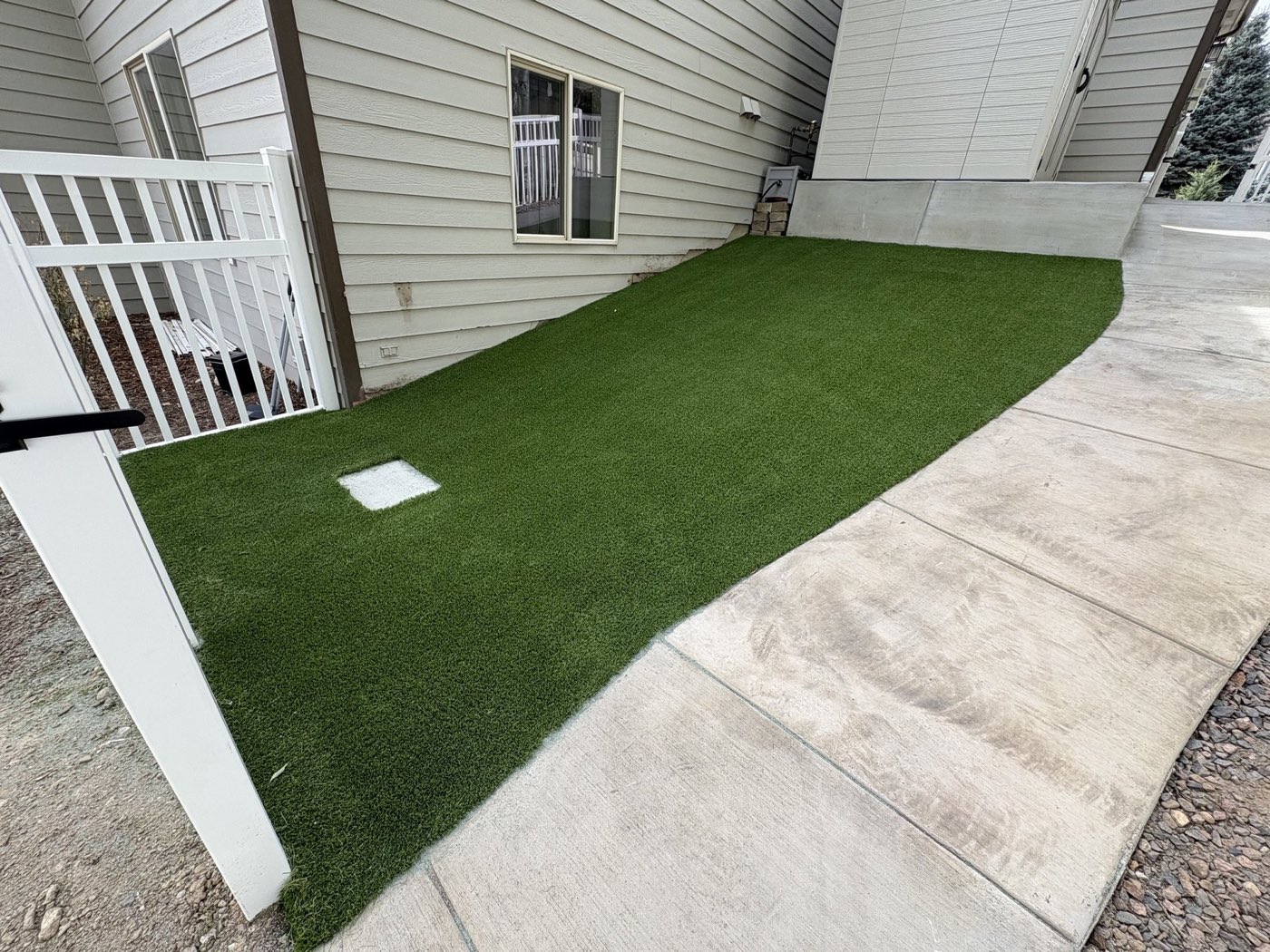
Algae need three things: moisture, shade and something to eat. On the Grand Strand the moisture comes from fifty-plus inches of rain and humidity that keeps surfaces damp overnight most of the year. The shade is the north side of the house, the strip between two houses, under a deck, along a privacy fence. The food is the fine organic layer that builds up in the infill every year: pine pollen in spring, live-oak catkins and leaves, dust, and in pet yards, waste residue. Green film is algae. Black film is algae plus mold plus trapped dirt. A musty smell with no visible growth is mildew in the infill.
Why bleach is the wrong fix
Bleach kills algae on contact and it is what most people reach for. It also lightens turf color, degrades the polyurethane backing over time, kills whatever plants share the border, and runs into the storm drain, which on the coast empties into a creek or the beach. It also does not remove the organic layer the algae was eating, so the patch comes back. A turf-safe algaecide or an oxidizing cleaner does the job without those costs.
Brian prices it by square foot before any work starts, and every job ends blown clean.
How we remove it
- Clear all debris and power-brush the film and the matted organic layer up out of the pile.
- Rinse the organic layer out of the infill with a high-volume, low-pressure flush. This is the step that matters: remove the food.
- Apply a turf-safe algaecide or oxidizer and let it dwell.
- Apply an antimicrobial to slow regrowth.
- Find the reason it stayed wet, and tell you.
That is the algae and mold removal service. It is part of a Premium Restoration and, because algae usually affects a strip rather than a whole yard, often falls in the smallest price band.
Keeping it off
Blow the shaded strip off every couple of weeks in pollen and leaf season so the food never builds up. Redirect any downspout that dumps onto the turf. If the strip is below the patio grade, ask about a drain. And plan on an algae check once a year, in late spring after pollen ends, which is when the memberships schedule it.
Free quote, priced by square foot. You approve any add-on before we do it.