Why does my artificial grass smell musty or like mildew when there are no pets around?
A musty or mildew smell with no pets on the turf is decaying organic matter, mostly pollen, dust and leaf litter, breaking down in infill that stays damp and shaded. It is not ammonia, so enzyme pet treatment will not touch it. The fix is removing the organic layer with a power brush and flush, then an antimicrobial treatment, and finding why that spot never dries. TIMELESS Turf Restoration clears this across the Grand Strand.
What is actually making the smell
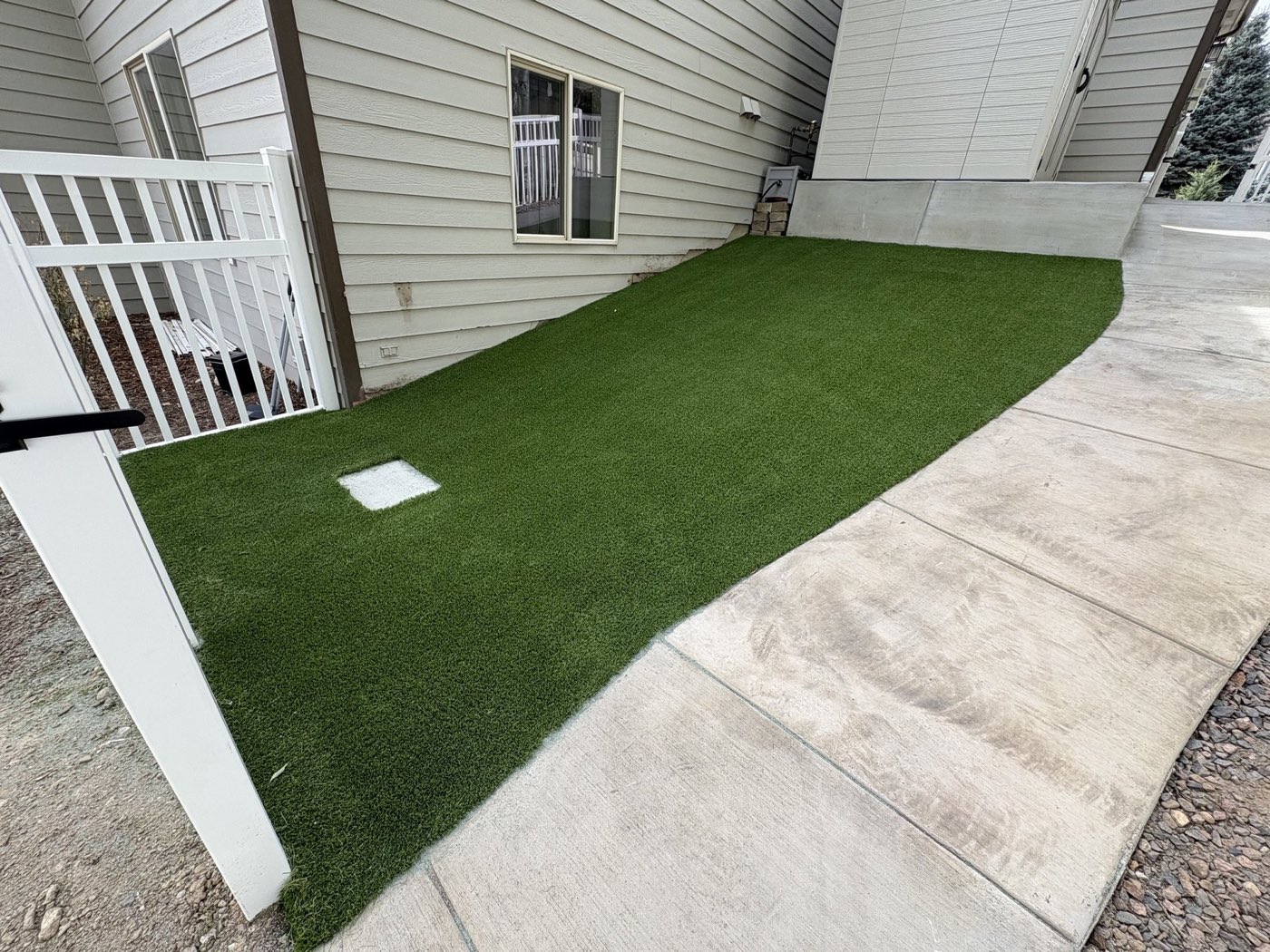
Fresh artificial turf has almost no smell of its own. A musty, mildew smell without a pet in the picture means organic matter has settled into the infill and started to break down: pine pollen paste from March, live-oak leaves and catkins from April, wind-blown dust, grass clippings tracked in from the border bed. In a spot that stays shaded and damp, mostly the north side of the house, a fence line, under a deck, that layer never fully dries and mold and mildew work on it steadily. The smell is musty and earthy, closer to a wet basement than to ammonia, and it usually builds gradually over a season rather than overnight.
How to tell it from a urine smell
Kneel at the spot and smell the turf, then part the fibers and look at the infill. Urine residue smells sharp and ammonia-like and the infill underneath is usually pale, just discolored. A musty smell is duller and earthier, and the infill often looks darker, matted or slightly greasy with a fine buildup that clings to your fingers. Check whether the spot gets any direct sun; a strip that never sees light by early afternoon is the classic mildew spot. If there is no pet on the property at all, organic buildup is almost always the answer.
Brian prices it by square foot before any work starts, and every job ends blown clean.
What fixes it
- Clear debris first, so nothing is still feeding the layer.
- Power brush against the grain to lift the matted organic film out of the pile.
- Flush the infill with a high-volume, low-pressure rinse to carry the loosened material through the backing.
- Antimicrobial treatment to knock back the mold and mildew already established.
That is the algae and mold removal service, and on a shaded strip it usually falls in the smallest Premium Restoration price band rather than needing a whole-yard visit.
Keeping it from coming back
Blow the shaded strip clear every couple of weeks in pollen and leaf season, since that is where the food supply comes from. If a downspout or a low patio edge is draining onto that spot, redirect it; standing moisture is what lets mildew win over sunlight. A strip that stays mildewed no matter what usually needs a look at drainage, which we will point out on the visit rather than just retreat it every year.
Free quote, priced by square foot. You approve any add-on before we do it.