
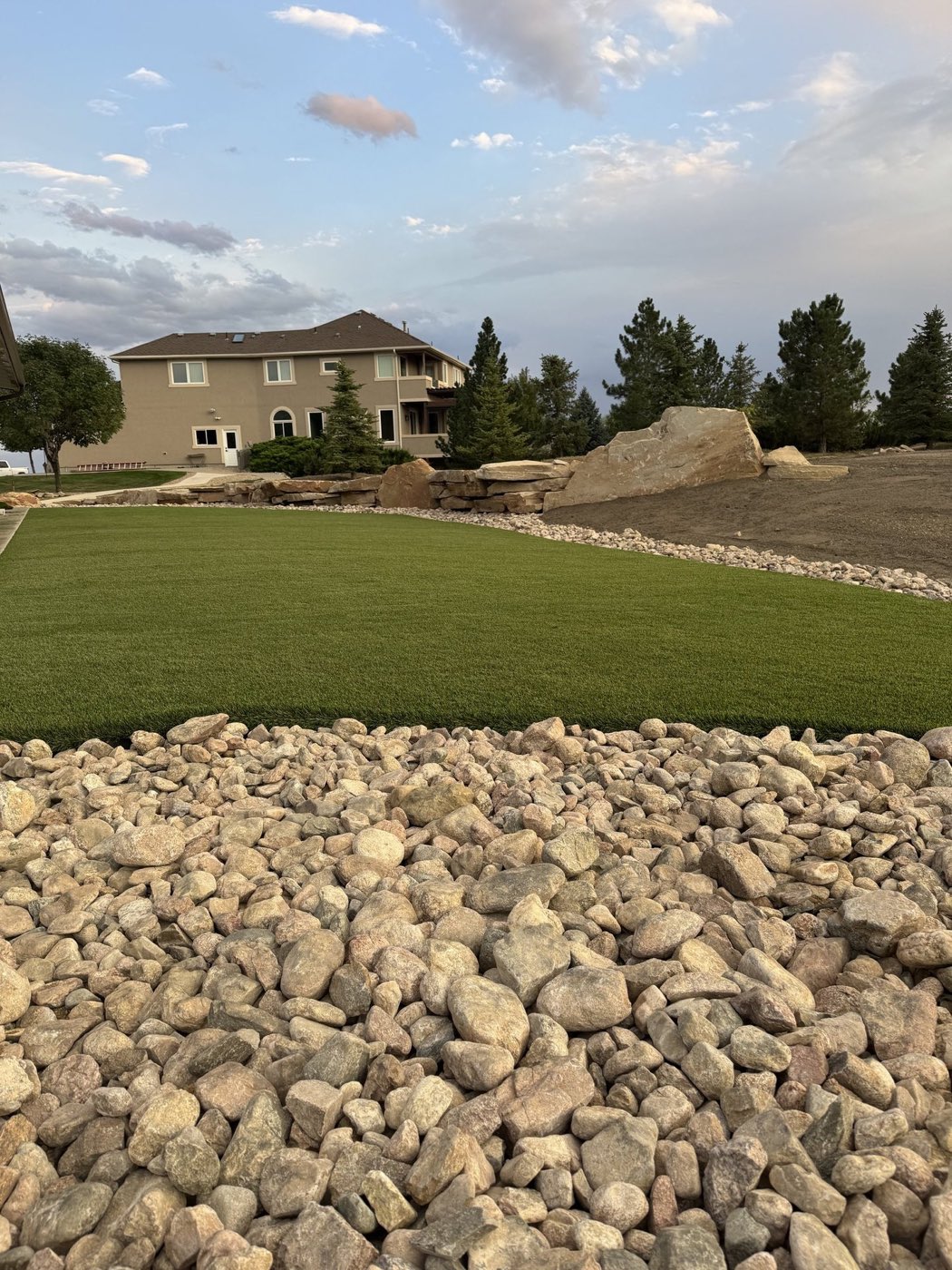
Why does the infill keep washing out of my artificial turf?
Infill washes out when moving water has enough volume or force to carry the loose sand or rubber granules with it, most often because the turf sits on a slope with no edge restraint at the bottom, a downspout discharges directly onto it, or it has been pressure washed, which blasts infill out on contact. The fix is finding and redirecting the water source, then topping up and redistributing the infill so the yard reads even again. TIMELESS Turf Restoration does this across the Grand Strand.
Where the water is taking it
Infill is sand or rubber granules held in place by weight and by friction against the fibers around it. A trickle of water moves it a little; a steady flow moves it a lot. Three sources do most of the damage on the Grand Strand. A downspout that empties straight onto the turf runs a small river across the same few feet every time it rains, and over a season that channel is bare while the low corner it drains to is buried. A yard laid on a grade without a solid edge restraint at the bottom lets infill migrate downhill with every rain, the same way loose gravel does on a slope. And a pressure washer, run over turf the way someone would run it over a patio, blasts infill straight out of the pile in the first pass; that is one of the reasons we never use one.
How to check
Walk the yard and part the fibers with your fingers at the highest point of any slope and again at the lowest. Thin infill with fibers packed flat and the backing starting to show is the source end. A built-up, almost buried strip along a fence, a curb, or a low corner is where it has been piling up. Follow that low spot back to see if it lines up with a downspout, a low point with no edge restraint, or the direction the ground actually slopes. If the thin area instead follows a stripe or a fan shape rather than following the grade, that pattern points to a pressure washer rather than water carrying it downhill, and our page on pressure washer damage covers that case in more detail.
Brian prices it by square foot before any work starts, and every job ends blown clean.
What fixes it
The water has to be dealt with first, or any top-up just washes out again. A downspout gets extended past the turf. A low edge with nothing holding it gets a proper edge restraint so it works like a small dam instead of an open gate. Once the water is redirected, the infill itself is usually a redistribution job: what has piled up at the low end is brushed and raked back over the thin area, then topped up where the total volume has genuinely dropped. That is infill replenishment, priced at $0.35–$0.65 per square foot to redistribute existing infill or $0.75–$1.50 per square foot installed where new infill is needed, and it is often part of a routine clean rather than a separate visit.
Keeping it in place
Once the water source is fixed, infill loss should slow to the normal, gradual kind every lawn has. Check the low corner after a heavy rain a couple of times a year and redistribute before it becomes a visible pile. Keep hoses and sprinklers off any part of the yard on a slope; turf does not need the water, and every extra gallon is another chance to move sand it does not have anywhere useful to go. And never bring a pressure washer near the turf, even to knock dust off it; the low-pressure rinse we use is built for exactly that job without the risk.
Free quote, priced by square foot. You approve any add-on before we do it.