It comes on top of two things already under way: fall shedding, and a city beach that has been open to leashed dogs at any hour since early September. Here is what each does to the turf, and what to do this week.
What does fall shedding season do to artificial turf, and how do you get dog hair out of it?
Fall shedding puts loose hair and undercoat on the turf, mostly where the dog lies, and it can work down into the infill. Take it out dry: blow off loose hair, brush against the grain to lift the rest, and bag the pile. Rinse last, since a hose tends to push hair deeper. TIMELESS Turf Restoration includes power brushing in every Essential Clean across the Grand Strand.
Key takeaways
- Blow and brush shed hair out while the turf is dry. A hose tends to push it deeper into the infill.
- With sunset now before 5:30 p.m., take a flashlight on the last pickup and check the yard again in the morning.
- Myrtle Beach allows leashed dogs on the beach at any hour until May 1, so keep a towel and a bucket by the gate.
- Power brushing is part of every Essential Clean, from $199 for up to 500 square feet.
Fall shedding is under way
The American Kennel Club says dogs that shed seasonally usually shed most in spring and fall. The main trigger is the change in daylight and temperature, and in fall the lighter summer coat comes out to make room for a thicker one. Dogs that live mostly indoors under artificial light tend to shed more evenly through the year. If the dog brush is filling up faster than it did in August, the yard is collecting the same hair.
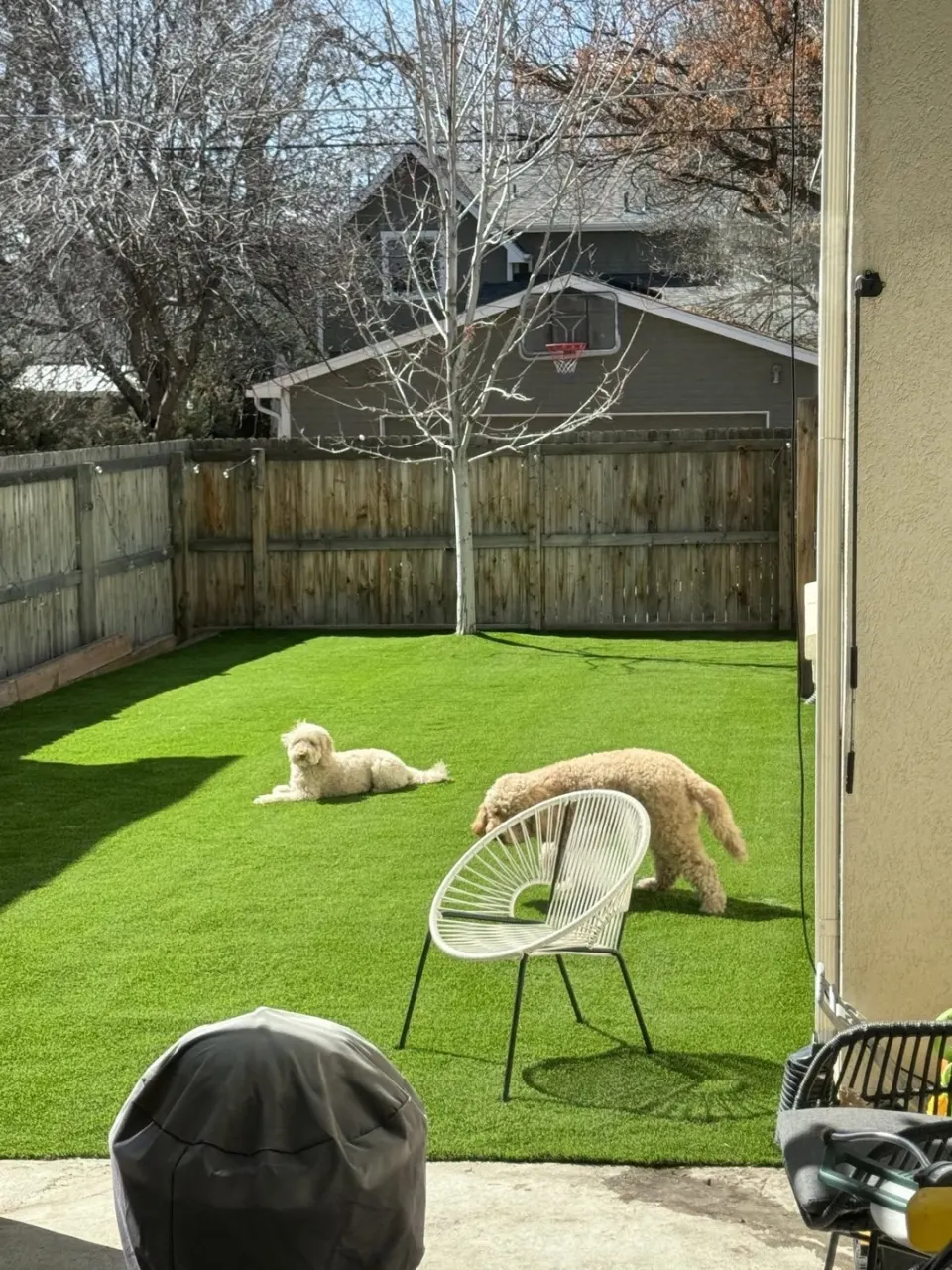
On turf it gathers where the dog lies: the spot by the back door, the shade under the deck, the strip along the fence where it watches the street. At first it sits on top of the fibers and blows around. Shed hair and undercoat can work down into the infill in those lying spots and hold residue there.
That is a different job from a flattened path. A matted path is fibers bent over that need standing back up. Hair is foreign material in the turf, and it has to be lifted out.
Get the hair out dry
The order matters more than the tools. Pick a dry afternoon, and do it whenever you see hair collecting in the lying spots.
- Look first. Part the fibers with your fingers in a lying spot. Hair sitting on top only needs the blower. Hair that has worked down between the fibers needs the broom as well.
- Blow on low. Run the leaf blower on a low setting with the nozzle well up off the surface, and work across the lying spots toward a patio or path edge. If sand sprays, lift the nozzle or turn the blower down.
- Brush toward one corner. Brush the lying spots against the grain, working toward one corner, so the lifted hair gathers in a pile instead of spreading across the yard. Our guide to brushing artificial grass covers the broom and the stroke.
- Bag it. Pick the piles up with a dustpan and put them in the trash. Blown into the beds, hair tends to drift back onto the turf with the next breeze.
- Rinse after, not before. Keep the daily rinse of the dog's pee spot going as usual. On brushing days, do the dry work first and rinse once the hair is out. Water mats hair together, and a hose tends to carry it down into the infill.
Brush the dog on the patio or in the garage rather than on the turf, so the coat you pull out never reaches the yard.
Across a whole yard, a power broom reaches the hair a blower alone cannot, as our page on what a power broom does explains.
Brian prices it by square foot before any work starts, and every job ends blown clean.
The evening pickup now comes after sunset
For most people the after-work pickup now comes after sunset, often in the dark, and it will for months. A pile missed in the dark gets stepped on, by the dog or by you, and ground down into the fibers, which is how a smell spot starts.
- Take a flashlight on the last trip out and sweep it slowly across the area the dog uses. A phone light works. A headlamp leaves both hands free for the bag.
- Walk the yard in the morning. The same time change moved an hour of light to the start of the day, so the first trip out is the easy time to catch anything you missed.
If one has already been stepped in, the steps for lifting it and treating the spot are on our page about cleaning dog poop off artificial grass. The rest of the everyday pickup and rinse is in our three-minute daily routine.
Beach walks come home on the paws
From the day after Labor Day until May 1, the City of Myrtle Beach allows leashed dogs on the beach and the boardwalk at any hour. Other towns set their own rules, so check yours before you go.
Wet sand rides home on paws and fur. Keep a bucket of water and an old towel by the gate, and rinse or towel the paws before the dog reaches the turf.
If a gritty layer does show up on the path from the gate to the door, it is usually the yard's own infill, moved around by traffic and rain, rather than sand from the beach. Brush it back down against the grain. Our page on sand on top of artificial grass explains why it shows up and how to set it back.
When to call us
Most yards get through shedding season with a blower, a broom and a flashlight.
Call when hair is still visible down in the lying spots after you have blown and brushed, or when grit keeps coming back on the path from the gate after you have brushed it down. That is the point where the yard needs a power brush across all of it rather than a push broom on a few spots. Power brushing is part of every Essential Clean, from $199 for up to 500 square feet and $249 for 501 to 1,000, finished the way every visit is: blown clean. To keep a brush going through the yard all year, the quarterly memberships that include brushing are TIMELESS ELITE at $139 a month, which puts a Premium Restoration on the calendar every quarter, or Pet Turf ELITE at $169 a month for heavy-use dog yards.
Free quote, priced by square foot. You approve any add-on before we do it.