What should an HOA turf maintenance contract include?
A usable HOA turf spec names each area and its square footage, sets a frequency per area, lists the product categories allowed and banned, says where rinse water may and may not go, and requires a report with photos and infill readings after every visit. Dog parks need monthly odor work; amenity greens quarterly. TIMELESS Turf Restoration bids to specs like this for Grand Strand communities and will help a board write one.
1. Scope: name every area
Measure each turf area separately and list it. Vendors price by square footage and condition, and a bid on "the common areas" is a guess.
| Area | Type | Sq ft | Use | Notes |
|---|---|---|---|---|
| Dog park | Pet turf, odor-control infill | 3,200 | Daily, heavy | Two gates; hose bib at north fence |
| Pool surround | Landscape turf | 900 | Seasonal, heavy | Sunscreen and food stains; chlorinated splash |
| Playground | Play turf over pad | 1,400 | Daily | Sanitize after clean |
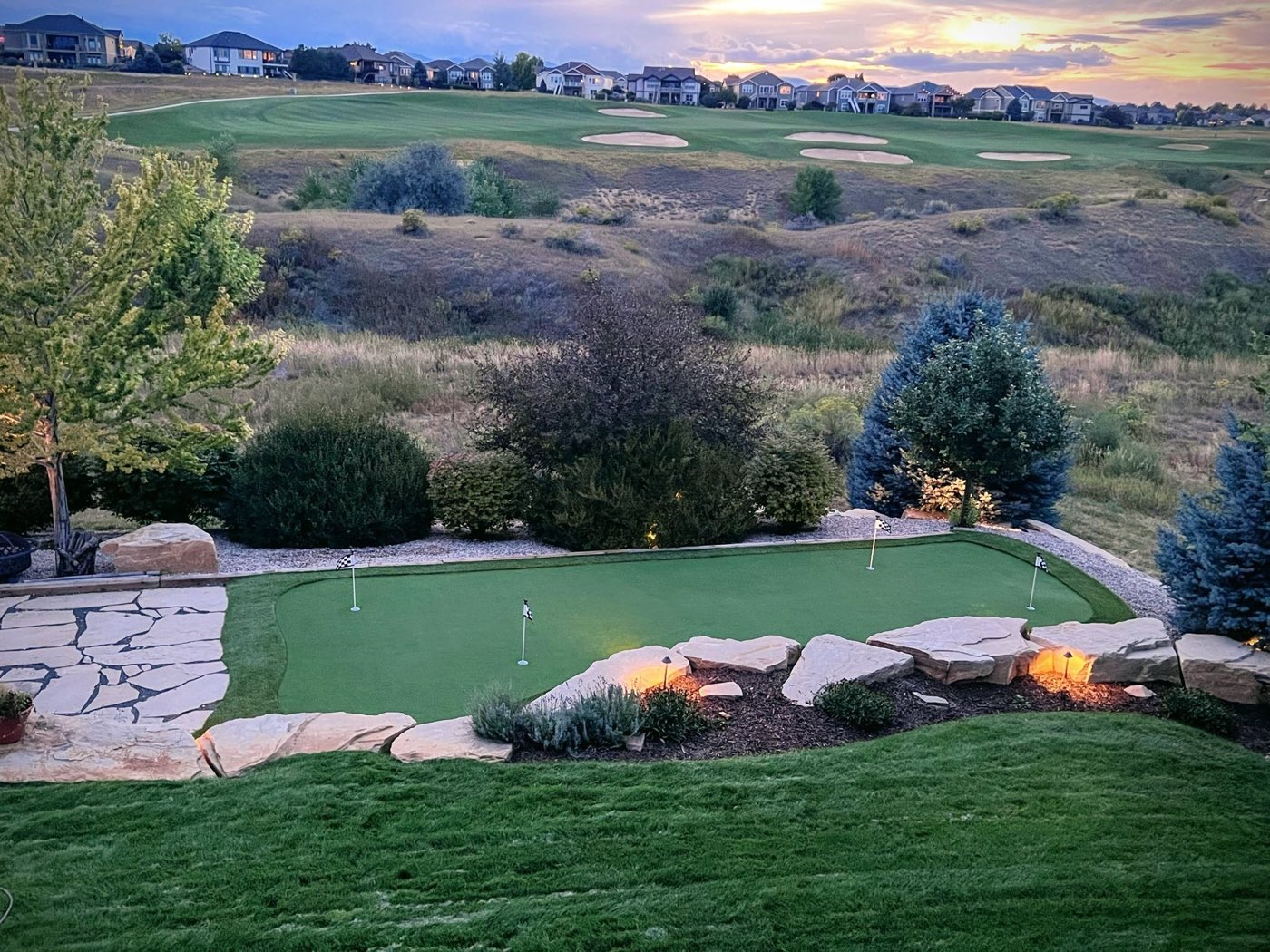
| Putting green | Synthetic green with fringe | 1,800 | Daily, light | Under live oaks; pollen and leaf drop |
| Entrance strips | Landscape turf | 600 | Visual only | Irrigation overspray from beds; mineral film |
Replace the example rows with yours. Add a site plan with the areas marked and where the hose bibs and drains are.
2. Frequency by area
| Area | Routine (landscaper or staff) | Professional | Seasonal |
|---|---|---|---|
| Dog park | Waste pickup daily; hose-down twice weekly | Monthly odor and antimicrobial treatment May to October; quarterly otherwise; Premium Restoration twice a year | Infill in the busiest zone assessed each spring |
| Pool surround | Blow off with pool service | Premium Restoration before pool opening; Essential Clean at closing | Stain treatment as found |
| Playground | Blow off weekly; spot-clean same day | Clean then sanitize quarterly; monthly June to September | Post-storm check |
| Putting green | Blow off weekly; brush monthly | Quarterly brush and cup clean; annual top-dress after pollen | Rinse and brush weekly in March and April |
| Entrance strips | Blow off with mowing | Essential Clean annually after pollen | Descale as found |
| All areas | Post-storm visit within two weeks of any named storm | Seam and edge walk every spring |
Brian prices it by square foot before any work starts, and every job ends blown clean.
3. Products and methods
Allowed: enzyme cleaners labeled for pet or synthetic turf; antimicrobials labeled for synthetic surfaces; non-chlorine algaecides and oxygen-based oxidizers; mild descalers made for synthetic surfaces; infill matching the installed type, with odor-control infill in the dog park. Method: power brushing against the grain; low-pressure, high-volume rinse at hose pressure; treatments applied after cleaning and allowed their labeled dwell.
Banned: chlorine bleach; muriatic or other strong acids; solvents; pressure washers; wire brushes and metal rakes; any product not labeled for synthetic turf. Require the vendor to provide product labels and safety data sheets for everything used on site, kept on file with the management company.
4. Runoff handling
- No rinse water or product runoff to be directed into storm drain inlets, curb gutters or the pond.
- Rinse water to be directed across the turf's own drainage or onto adjacent landscape beds.
- Treatments applied at labeled rates, allowed to dwell, then rinsed; no product left pooled on the surface.
- Dog park hose-downs by staff or the landscaper to follow the same rule.
- Vendor to note on the visit report where rinse water went.
Many communities on the Grand Strand have stormwater covenants and pond permits that already say most of this; check yours and paste the wording in.
5. Reporting
After every visit, a one-page report: date, areas serviced with square footage, tasks done, products used, infill depth readings at the same three marked points in each area, seam and edge findings with photos, anything recommended with a price, and any incident. Once a year, a condition report per area with a photo set and an infill trend, so the board can plan for replacement in the dog park's busiest zone before it is needed.
6. Comparing bids
| Ask every bidder | Why |
|---|---|
| Price per visit, per area, at the frequency above | Makes the three bids the same job |
| Unit rates for add-ons: odor treatment, antimicrobial, infill per sq ft, seam and edge repairs | The board will need them mid-year |
| Water pressure and equipment | Rules out pressure washing before it happens |
| Product categories and where the SDS will be kept | Compliance with sections 3 and 4 |
| Response time after a named storm | The two-week salt window |
| Sample visit report | Shows whether they have done this before |
Ask for whatever vendor paperwork your management company requires of any contractor; that is their list, not ours.
When to call us
Send the spec and the square footages and we bid to it. Areas up to 5,000 square feet price off the standard table: the 3,200-square-foot dog park above is $899 for a Premium Restoration and $599 for an Essential Clean, with monthly odor and antimicrobial treatments quoted on the area; the 1,400-square-foot playground is $499 and $299. Areas over 5,000 square feet and putting greens are quoted after a walk. We will also sit with a board and turn a landscaper's contract into this spec at no charge.
Free quote, priced by square foot. You approve any add-on before we do it.