How do you get rid of fleas on artificial turf?
Treat the dog with a vet-recommended flea preventative, since fleas live on the animal and reinfest the yard otherwise, and clear the organic debris in shaded, damp strips where flea eggs and larvae can develop. A pet-safe insect growth regulator applied only to that shaded strip is the targeted option if debris removal is not enough. TIMELESS Turf Restoration clears that kind of buildup on Grand Strand yards.
Key takeaways
- Fleas spend most of their life on the dog. Treating the yard without treating the animal does not hold.
- Eggs and larvae need shade, moisture and organic debris, the same conditions that grow moss and algae.
- Clear the debris layer in those strips rather than spraying the whole yard.
- Skip broad-spectrum lawn insecticide on turf. It is unnecessary exposure and does not fix the source.
Where fleas actually live
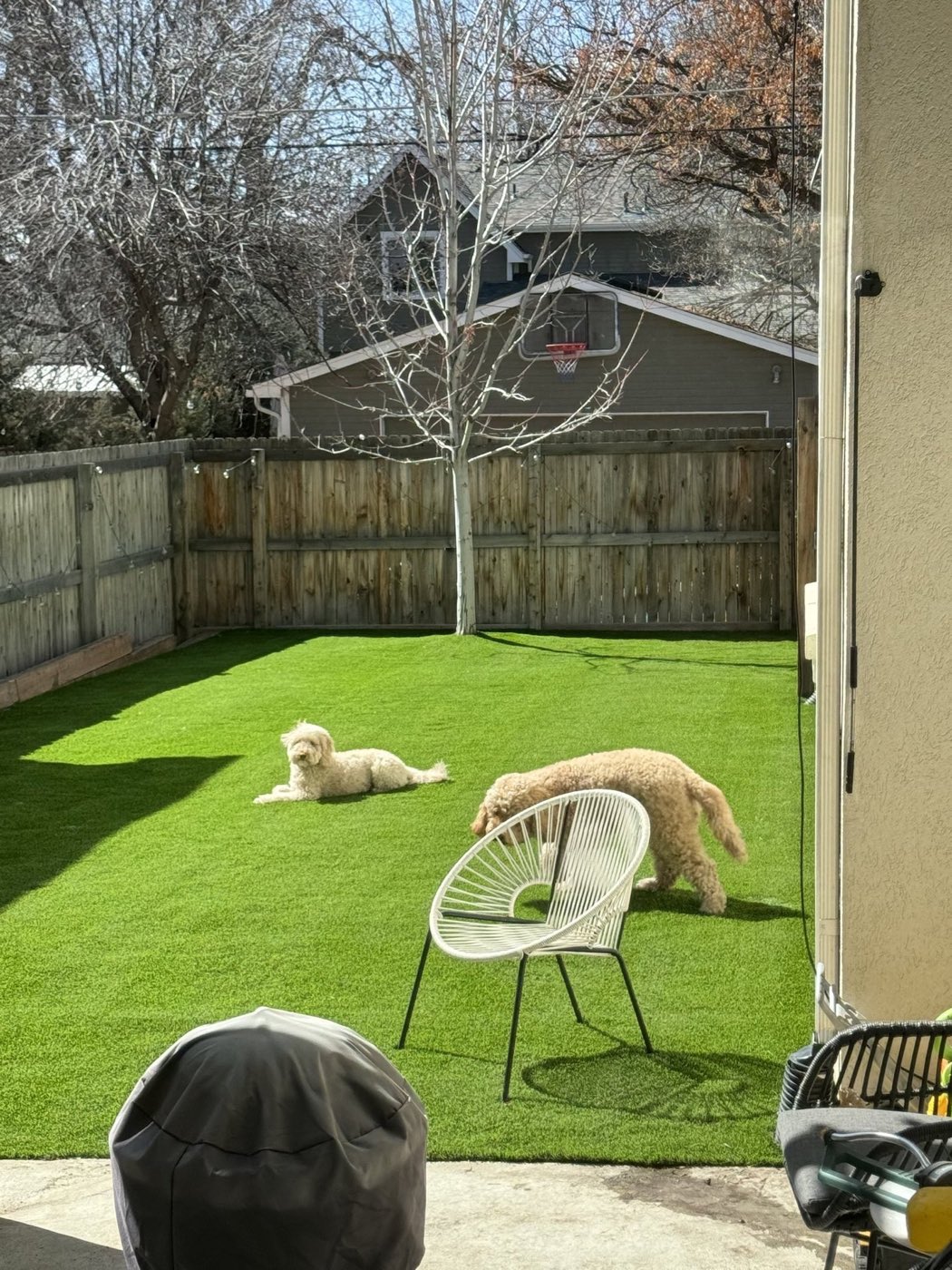
Adult fleas live on the host. Eggs fall off into the surrounding environment, and larvae develop in organic debris, out of direct light, away from dry surfaces, before pupating into a hard, protected case that can sit dormant for weeks waiting for the vibration and warmth of a passing animal. Open, sunny turf dries out fast and offers little organic material, which makes it a poor place for any of those stages to survive. A shaded, damp strip with a build-up of pollen and leaf litter, the same conditions that grow moss and algae, is exactly the pocket where a few can hang on, and the dormant pupae are why a yard can seem clear for weeks and then have another small flare-up.
Treat the dog first
Without addressing the host, any yard treatment is temporary, because the dog keeps redepositing eggs wherever it lies down. Start with a vet-approved flea preventative for the animal, and check bedding and any shaded lounging spot near the house, not just the turf. A dog that spends most of its time indoors still tracks fleas in from walks or the yard, so the animal is worth treating even when the yard itself looks like the main source.
Brian prices it by square foot before any work starts, and every job ends blown clean.
Clear the organic buildup
Identify the shaded strips: a fence line, under a deck, the north side of the house. Blow and rinse those spots more often than the rest of the yard, and hand-pull any moss growing there, since removing the debris removes the habitat larvae need. Our moss removal page covers the same shaded strips from a different angle.
If you use a product, use the right one
If cleaning and treating the dog do not fully clear it, a pet-safe insect growth regulator labeled for use around pets and outdoor synthetic surfaces can be applied to the specific shaded strip, at label dilution, with pets kept off until dry. Targeted, not broadcast, over the one spot that is actually the source.
What not to spray
- Broad-spectrum lawn or garden insecticide not labeled for pet contact. Residue in the infill is a real risk to a dog that lies in it.
- Anything with a warning against use near pets, full stop.
- "Just in case" whole-yard treatments repeated on a schedule. Unnecessary, and it does not address the shaded strip that is the actual source.
How long it takes to see a result
Because a dormant pupa can sit protected for weeks, a single treatment does not always mean fleas are gone for good on the first pass; a light second check of the same shaded strip two or three weeks later, after a fresh cleaning, catches whatever the first round missed before it becomes noticeable again. A yard that keeps flaring up in the exact same corner despite that follow-up usually has more organic buildup in that spot than a hose alone is reaching.
When to call us
Fleas that persist despite treating the dog and cleaning usually mean the organic layer is more built up than a hose reaches. Our pet odor removal and algae and mold removal services clear that buildup as part of a Premium Restoration from $299. For a heavy-use dog yard, the Pet Turf ELITE membership at $169 a month keeps this from building back up between visits.
Free quote, priced by square foot. You approve any add-on before we do it.