Can dogs use a synthetic putting green, and what do they do to it?
Dogs can use a green without lasting harm, but regular use costs speed. Urine soaks into the sand fill harder to flush than lawn infill, digging displaces sand out of level, and nails fray fiber at seams and cup edges. Routing dogs to a separate pet area and rinsing accidents right away protects the green better than treating it after. TIMELESS Turf Restoration restores dog-used greens across the Grand Strand.
Key takeaways
- A dog on the green occasionally is not the problem; a dog that treats it as the yard is.
- Urine goes into the sand fill and is harder to flush clean than ordinary lawn infill.
- Nails catch fiber at seams and cup edges faster than anywhere else on the surface.
- A separate pet zone protects the green far better than any amount of cleanup after the fact.
What a dog actually does to a green
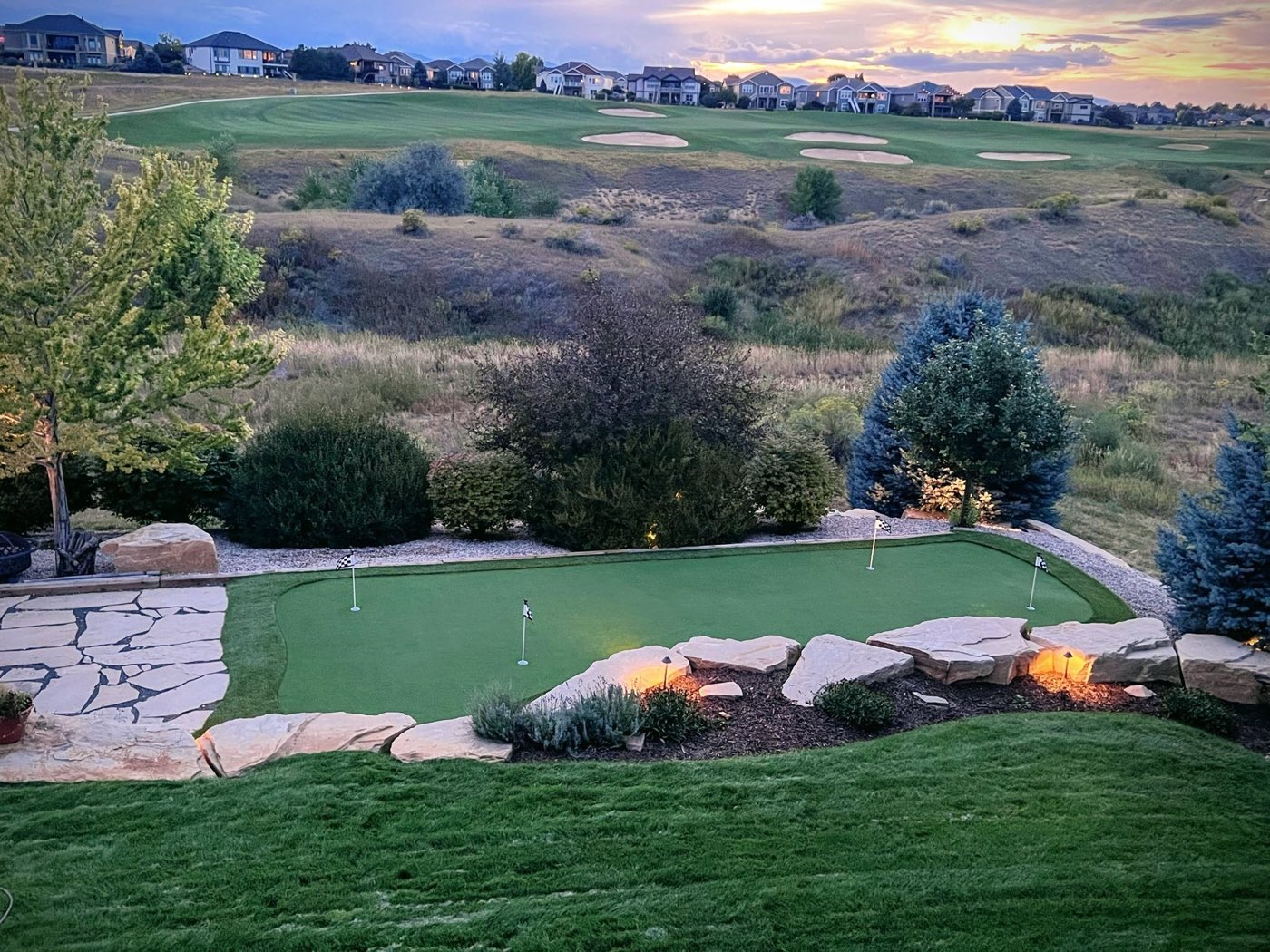
A dog on a putting green touches almost everything that makes the surface perform. None of this means a dog cannot ever set foot on the green, but a green that becomes the dog's regular spot will show it faster than almost any other kind of wear on the surface.
- Urine. It passes through the fibers in seconds and settles into the sand fill, the same way it does into lawn infill, but a green's sand sits shallower and denser around the fiber base, so it holds the residue closer to the surface.
- Digging and turning. A dog that spins, chases a ball or digs at the surface displaces sand out of level, the same problem covered on our page about a green that rolls slow or bumpy.
- Nails at seams and cups. Claws catch on a seam edge or a cup collar more easily than on the flat surface, and repeated catching frays fiber right at those vulnerable points.
- Solid waste on short fiber. Putting-green fiber is far shorter than lawn turf, so waste sits more exposed on the surface instead of settling down into taller blades.
Why the sand fill makes urine harder to clear
Lawn infill is deeper and looser, and a hose rinse carries urine residue down through it fairly easily. Green sand is packed shallower and firmer by design, since that firmness is what gives the surface its speed, and that same firmness slows how quickly a rinse flushes residue all the way through. Left untreated, the bacteria that break urine down into ammonia have more time working close to the surface, in the same infill the ball rolls across, rather than lower down where it would be less noticeable.
Brian prices it by square foot before any work starts, and every job ends blown clean.
The practical plan: give the dog somewhere else
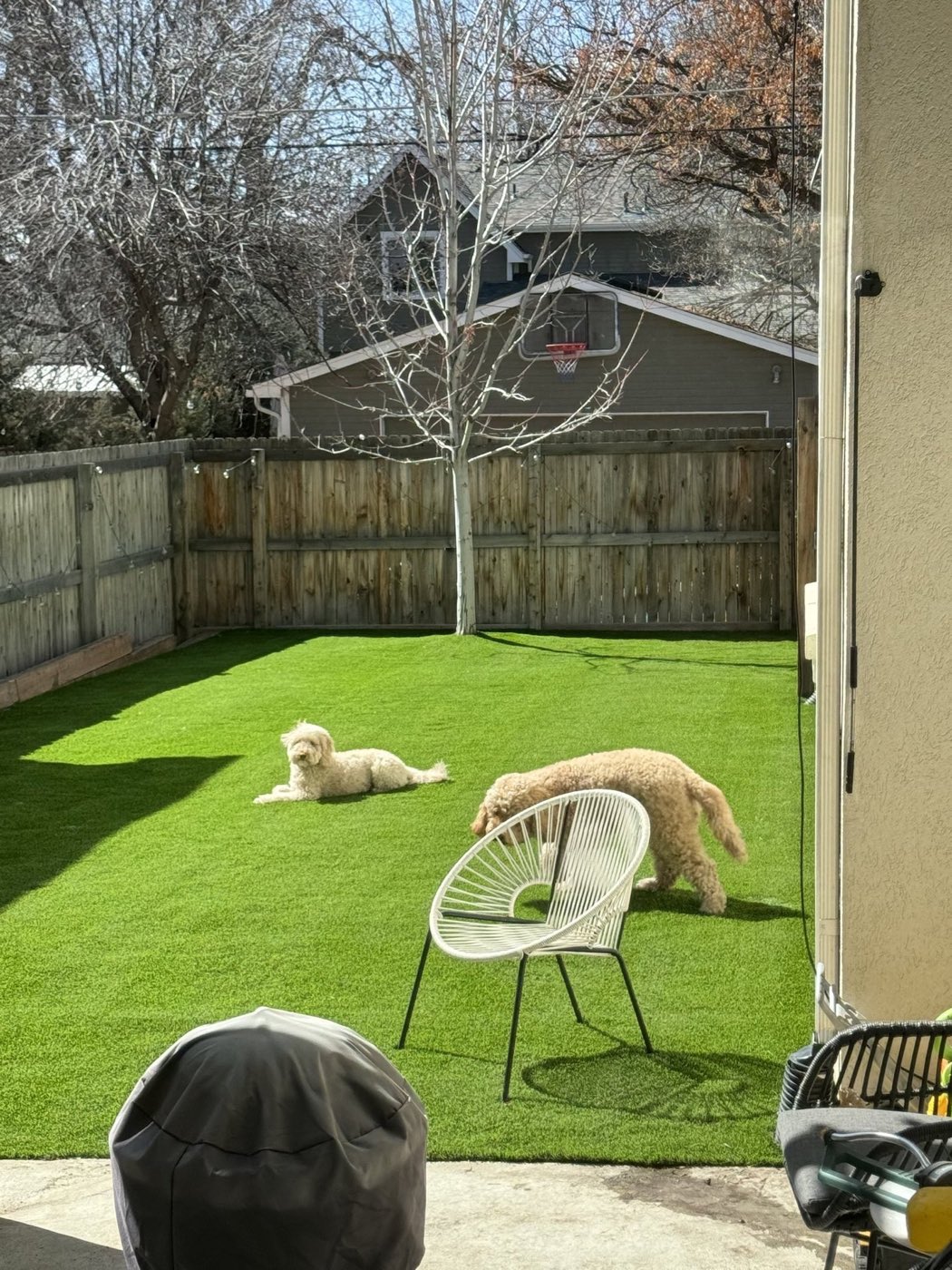
The simplest fix is the one that costs nothing: keep the green for putting and give the dog its own turf. A dedicated dog run or a general pet turf area elsewhere in the yard is built and maintained for daily traffic, with infill and a cleaning schedule suited to that use, while the green stays reserved for the game it is built to play. This is worth setting up before the green becomes the dog's habit, since a dog that has already claimed the green as part of its route is harder to redirect than one offered the choice from the start.
If it happens anyway
An occasional accident is not a crisis if it is dealt with right away. Rinse the spot promptly with a hose on a gentle setting so the residue does not sit and dry into the sand, and keep the dog off the green while it is still wet. A spot that is caught and rinsed the same day is far easier to keep from becoming a lasting odor or stain than one left to soak in overnight, since the residue has had far less time to work down past the fiber and into the sand itself.
What a restoration does for a dog-used green
Where a green has taken regular dog use, a restoration goes beyond a normal top-dress. The affected sand is treated with an enzyme cleaner to break down urine residue at the source rather than masking it, and sand that has become genuinely crusted or contaminated is pulled out and replaced rather than brushed and reused. Cups and seam edges get a closer look for frayed fiber from nail contact, since those are the spots that take the damage first. This is more thorough than a routine top-dress precisely because dog use concentrates residue and wear in the same few square feet, rather than spreading it evenly the way ordinary foot traffic does.
When to call, and what it costs
Call when the green smells on a humid morning even after rinsing, when sand near a cup or seam looks visibly displaced, or when you can see fraying at the edges a dog uses to turn. That work folds into a putting green restoration with an added pet-odor treatment, quoted after inspection, typically in the same range as our Premium Restoration bands, $299 to $899 depending on size and how much sand needs to be pulled and replaced.
Free quote, priced by square foot. You approve any add-on before we do it.