How do you take care of artificial turf that dogs use every day?
Daily-use turf needs more than a weekly rinse: pick up waste daily, hose the pet zone in the evening a few times a week, and get the infill professionally treated on a schedule rather than only when it smells. TIMELESS Turf Restoration treats pet turf across the Grand Strand with enzyme and antimicrobial treatment as part of a Premium Restoration, and keeps heavy-use yards on the Pet Turf ELITE membership.
Key takeaways
- Urine goes into the infill in seconds, not onto the blades; that is where the smell and the fix both live.
- Pick up solids daily, rinse the pet zone most evenings in summer, and do not let infill run thin.
- A one-dog yard usually needs a Premium Restoration two to four times a year on the coast.
- Bleach, pressure washers and wire brushes make pet turf worse, not cleaner.
What makes pet turf different
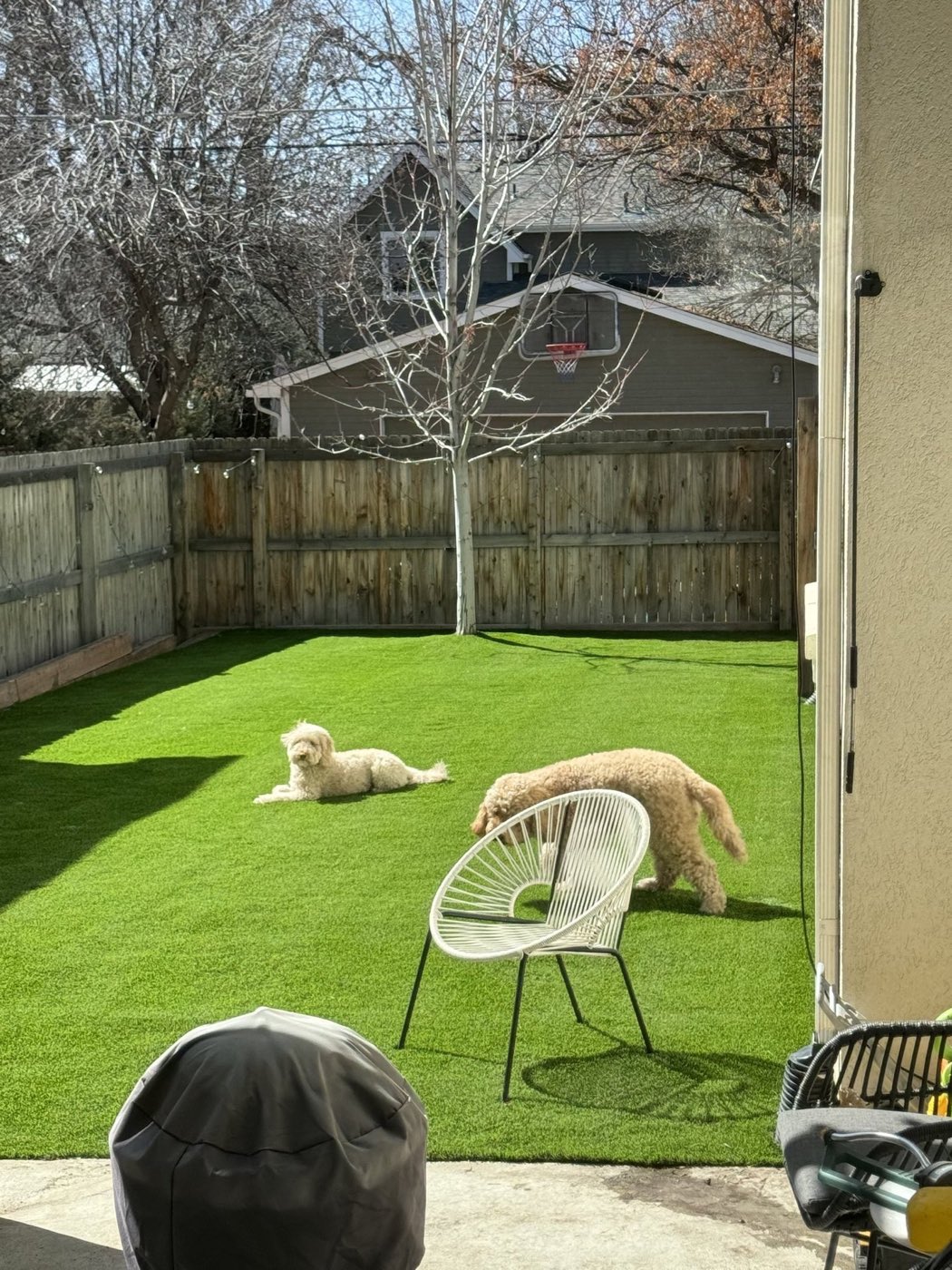
A lawn used only by people has to look good and drain rain. Turf a dog uses several times a day is doing more work than that. Urine passes through the fibers in a few seconds and lands in the infill, the sand layer that supports the blades, and on the backing underneath. That is where it stays until it is flushed, treated or replaced, because the surface you see was never holding the smell in the first place. The same corner near the door or along the fence gets used every day, so wear, residue and staining concentrate in a few square feet instead of spreading out the way foot traffic does on a lawn nobody uses hard.
The failure modes specific to pet turf
- Odor. Bacteria break urine residue down into ammonia in the infill and backing; humid Grand Strand mornings bring it back up even on days it did not rain.
- Infill crusting. Years of urine in one corner can bond the sand into a dark, crusted layer that plain rinsing does not loosen.
- Flattened, shiny paths. The route from the door to the favorite spot gets walked and marked daily; the fibers bend the same direction until they stay down.
- Light staining. A spot that gets marked constantly can bleach a shade lighter than the turf around it.
- Flies and gnats. They come for waste residue, not the turf itself, and cluster wherever that residue sits.
Brian prices it by square foot before any work starts, and every job ends blown clean.
Why the Grand Strand makes it worse
Fifty-plus inches of rain a year and humidity that sits near 85 percent before dawn most months means the infill in a pet zone rarely gets a real dry stretch between spring and fall. Bacteria that produce ammonia need moisture to stay active, so a yard that would go quiet for a week inland barely slows down here. That is the single biggest reason pet turf on the coast needs a tighter schedule than generic advice written for a drier climate assumes.
One dog or several: scaling the routine
Everything above assumes one dog using part of the yard. Two or more dogs, or a single dog with a small footprint to work with, concentrates the same load into less space and shortens every interval on this page. Daily pickup stays daily either way, but the evening hose-down often needs to happen every other day in summer rather than a couple of times a week, and the professional visit that works twice a year for a light-use yard usually needs to happen quarterly once a second dog is added. The tell is simple: if the smell comes back well before the next scheduled visit, the yard has outgrown the schedule, not the treatment, and it is worth moving to a membership rather than booking one-off visits that keep landing too far apart.
The routine
| Frequency | What to do |
|---|---|
| Daily | Pick up solid waste. It sits on top of the fibers if you get to it before it is stepped in. |
| Weekly (more in summer) | Hose the pet zone in the evening on a shower setting, not a jet. Spot-treat the favorite corner with an enzyme cleaner. |
| Monthly | Brush the paths and pet zone against the grain to lift matted fibers, and check infill depth with a finger or a ruler. |
| Two to four times a year | Professional deep clean: power brush, high-volume rinse, enzyme and antimicrobial treatment, infill topped up or replaced where it has gone thin or crusted. |
What to never do on pet turf
- Bleach. Lightens fibers, damages backing, kills border plants and does not remove the residue causing the smell.
- A pressure washer. Blows infill out instead of flushing residue through it.
- A wire brush or metal rake. Tears fibers, which then mat and shed.
- A deodorizer spray on its own. Covers ammonia with fragrance; the residue underneath is untouched and the smell returns.
- Letting the infill run thin. Thin infill puts urine straight onto the backing with nothing to filter it first.
When to call, and what it costs
Call when the yard smells on a humid morning even after your routine, when the infill in the favorite corner feels crusted or greasy rather than loose, or when a path stays flattened after you brush it by hand. That is the point where the job needs a power brush, a high-volume rinse and enzyme and antimicrobial treatment applied in order, which is a pet odor removal visit within a Premium Restoration: from $299 for up to 500 square feet of turf, scaling with size and condition. One-dog yards marked daily do well on a quarterly schedule; two or more dogs, or a dedicated dog run, are what the Pet Turf ELITE membership at $169 a month is built for.
Free quote, priced by square foot. You approve any add-on before we do it.