How do you take care of artificial turf under playground equipment?
Rinse sunscreen, food residue and tracked-in sand off regularly, keep infill topped up under swings and slide exits where impact compresses it fastest, and sanitize a few times a year since the turf sees many different kids' hands and knees rather than one household. TIMELESS Turf Restoration cleans and restores playground turf across the Grand Strand as part of a Premium Restoration.
Key takeaways
- Impact zones under swings and slides compress infill faster than the rest of the yard; check depth there first.
- Sunscreen, juice and sandbox sand build up on fibers even without a pet in sight.
- Sanitize a few times a year; many different kids using the same surface calls for it, not just visible mess.
- Skip harsh chemicals entirely; kids are on this turf with bare skin and hands.
What makes playground turf different
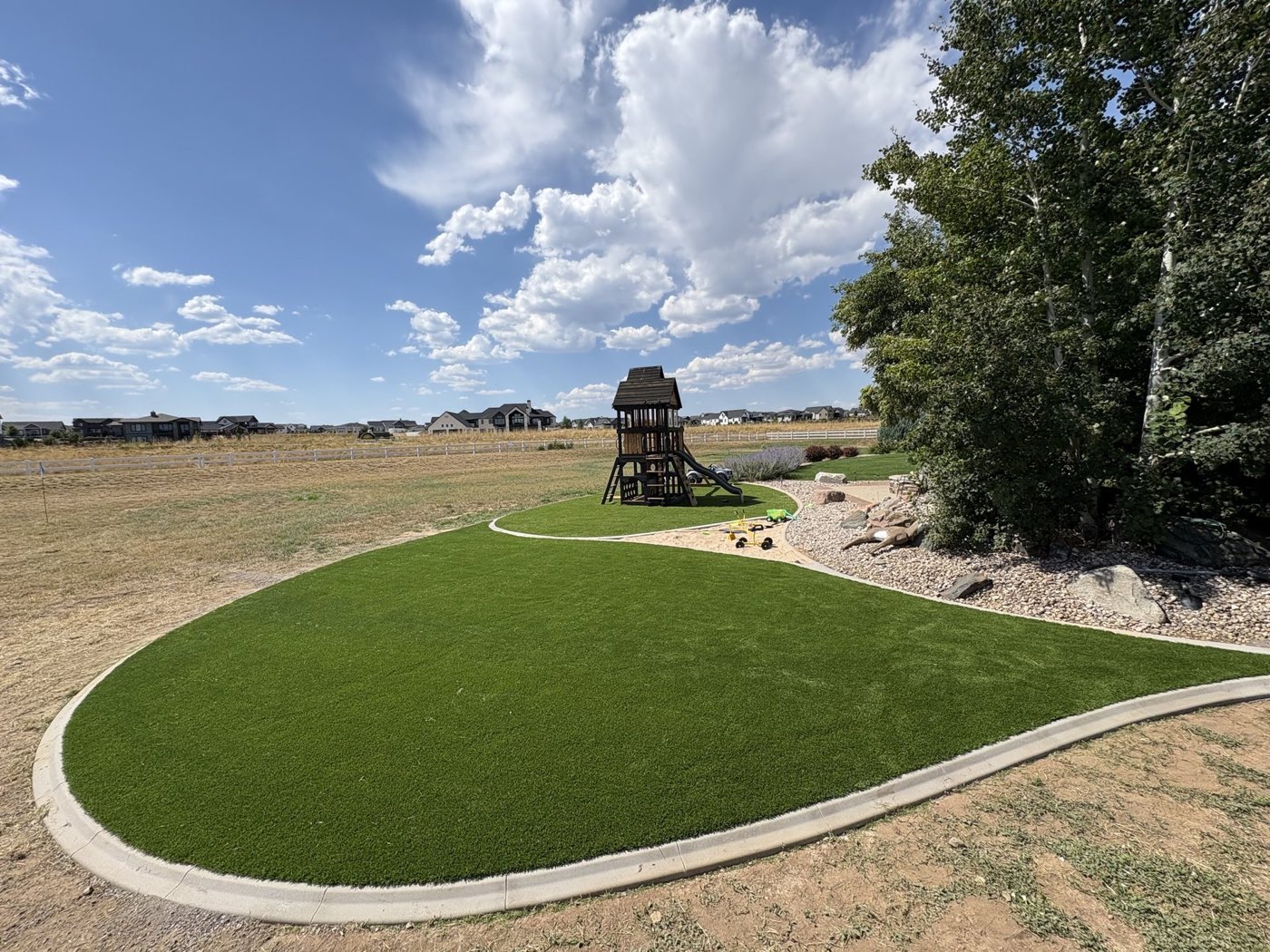
There is usually no dog in the picture, so playground turf skips the odor problems that drive most pet-turf care. What it gets instead is concentrated impact and a steady stream of things kids bring with them: sunscreen residue, spilled juice, tracked-in sandbox sand, snack crumbs. The stress is physical and residue-based rather than biological, and it is not spread evenly. The ground under a swing seat or at the bottom of a slide takes far more impact, over and over in the same few square feet, than the rest of the yard ever will.
Its specific failure modes
- Compacted infill under impact zones. Repeated jumping and landing packs the infill under swings and slide exits faster than foot traffic packs the rest of the lawn.
- Sunscreen and lotion film. Builds up on fibers over a summer and can leave them looking dull or slightly greasy.
- Tracked-in sand. Sandbox sand is a different size and shape than turf infill; it does not belong in the pile and can throw off drainage where it collects.
- Spot staining from juice, popsicles and snacks left to dry in the sun.
Brian prices it by square foot before any work starts, and every job ends blown clean.
Sun exposure and bare feet
Kids on a playground are barefoot more often than in any other part of the yard, and dark-colored infill and fibers in direct summer sun can get hot enough by early afternoon to be uncomfortable underfoot, sometimes before the rest of the yard feels the same way. Lighter infill and some shade over the play structure both help. It is worth checking the surface temperature with your own hand before assuming a hot afternoon is fine just because the grass looks the same as it did that morning.
The routine
| Frequency | What to do |
|---|---|
| Weekly | Rinse the whole play area, with extra attention under swings and at slide exits. |
| Monthly | Brush the impact zones against the grain and check infill depth there specifically; it goes thin faster than the rest of the yard. |
| A few times a year | Sanitize the whole surface, not just visibly dirty spots, since many different children use the same turf with bare hands and knees. |
| Yearly | Professional deep clean and infill top-up, timed after pollen season. |
When a playset moves or gets replaced
A swing set or slide that gets repositioned, even a few feet, moves the impact zone with it and leaves the old spot with compacted infill and no equipment over it to explain why. That is a good moment to check infill depth at both the old and new locations rather than assuming the yard has evened itself out on its own. The same applies when a playset is replaced outright: check depth under the new fall zones before assuming the ground underneath is still doing its job the way it was under the old layout.
What to never do
- Never use bleach or a strong disinfectant where kids will have bare skin contact; use a turf-safe antimicrobial instead.
- Never pressure wash impact zones; it strips out infill that is already thinner there than elsewhere.
- Never ignore infill depth under equipment. Thin infill under a swing or slide changes how a fall is cushioned, not just how the turf looks.
- Never let sandbox sand sit in the infill; sweep or rinse it out rather than brushing it further in.
When to call, and what it costs
Call when the ground under a swing or slide feels noticeably harder than the rest of the yard, when fibers in the play area look matted or dull no matter how often you rinse, or before a season of heavy use if the last professional visit is more than a year back. That is a Premium Restoration with attention to infill depth in the impact zones and an antimicrobial pass: from $299 for up to 500 square feet, scaling with the size of the play area. Most backyard playsets sit on turf well under 1,000 square feet.
Free quote, priced by square foot. You approve any add-on before we do it.