Can fleas and ticks live in artificial grass?
Fleas and ticks do not breed the way they would in soil or tall natural grass, but they shelter and survive in organic buildup, pollen, leaf litter, matted debris, that has settled into artificial turf infill, especially in shaded, damp areas near where a pet rests. Removing that shelter means power-brushing and flushing the organic layer out of the infill and sanitizing afterward. It does not replace flea and tick prevention on the animal itself, which a veterinarian handles. TIMELESS Turf Restoration removes the shelter side across the Grand Strand.
Why they show up on turf at all
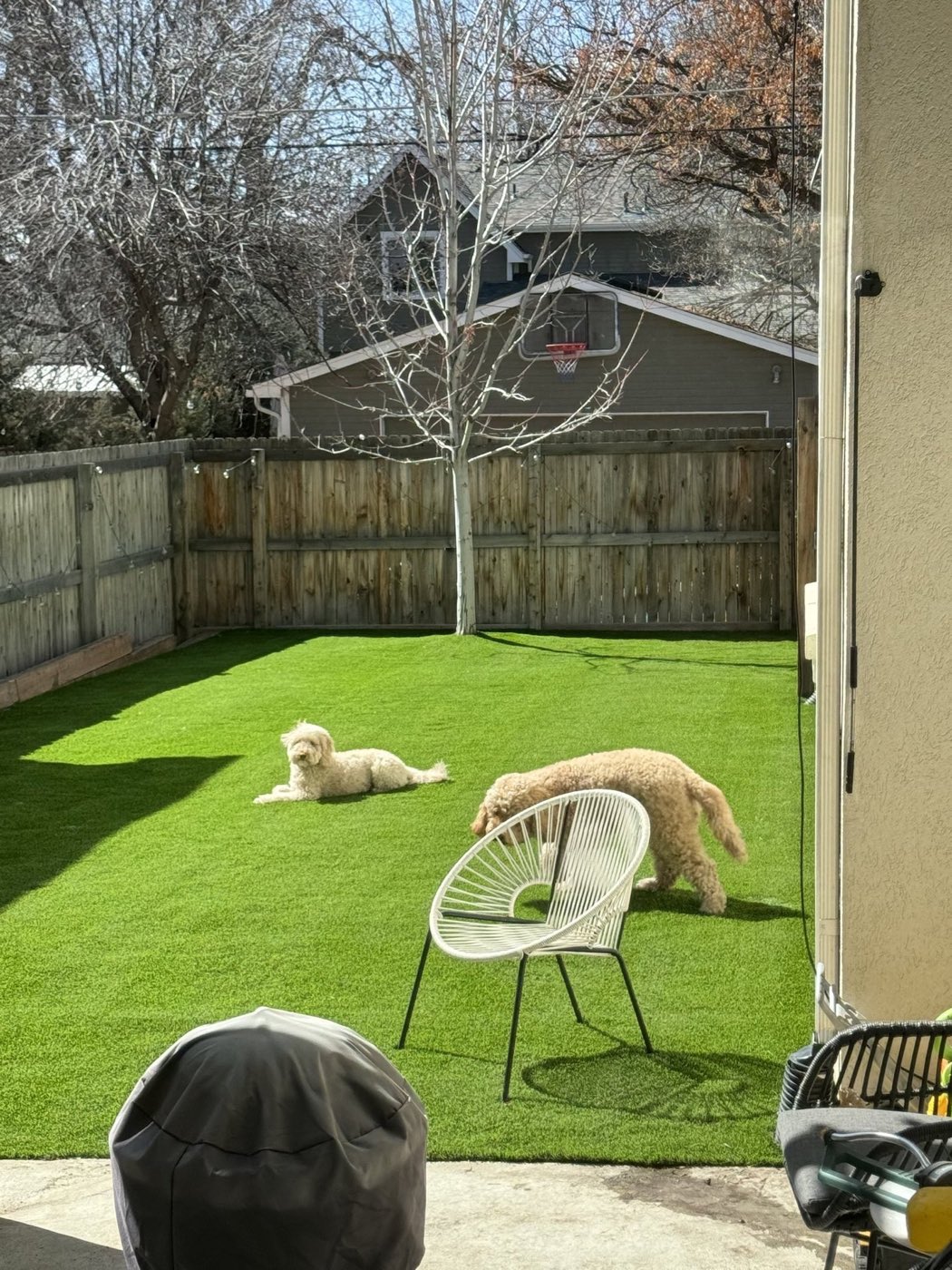
Fleas need a host and a sheltered, humid microclimate to survive between meals, and ticks wait in vegetation to latch onto a passing host. Clean, well-drained turf offers neither for long. But turf that has built up a layer of organic debris, damp pollen paste, matted leaves, pet hair and dander, in a shaded spot creates the same humid, sheltered microclimate that infested natural grass or mulch would, right next to where the dog naps or the family sits. The pests are not living in the plastic fibers; they are living in what has accumulated around them.
How to check
Look at where the pet spends the most time and where the yard stays shaded and damp longest. Part the fibers and check whether the infill there is matted with debris rather than loose and clean. A flea comb run over the pet after time in that area, and a look for ticks after the dog has been near a fence line or a shaded edge, will tell you more about current activity than the turf will on its own.
Brian prices it by square foot before any work starts, and every job ends blown clean.
What fixes it
Power brush the debris-laden areas to lift the matted organic layer, flush it out of the infill with a thorough rinse, and follow with an antimicrobial treatment to reduce the microclimate that lets anything shelter there. This is the same process used for algae removal, since both problems start with the same buildup. It does not treat the pet; that is between you and your veterinarian, and both sides need attention for the problem to actually go away.
Keeping them from coming back
Keep the pet's preventive treatment current, since that is what actually breaks the flea life cycle. Blow debris off the turf regularly, especially in shaded areas, so a shelter layer never gets the chance to build back up. A yard kept clear rarely has a flea or tick problem even with an active dog using it daily. A seasonal Premium Restoration timed for late spring, before shelter has a chance to build up over summer, is usually enough for most single-dog yards to stay ahead of it.
Free quote, priced by square foot. You approve any add-on before we do it.