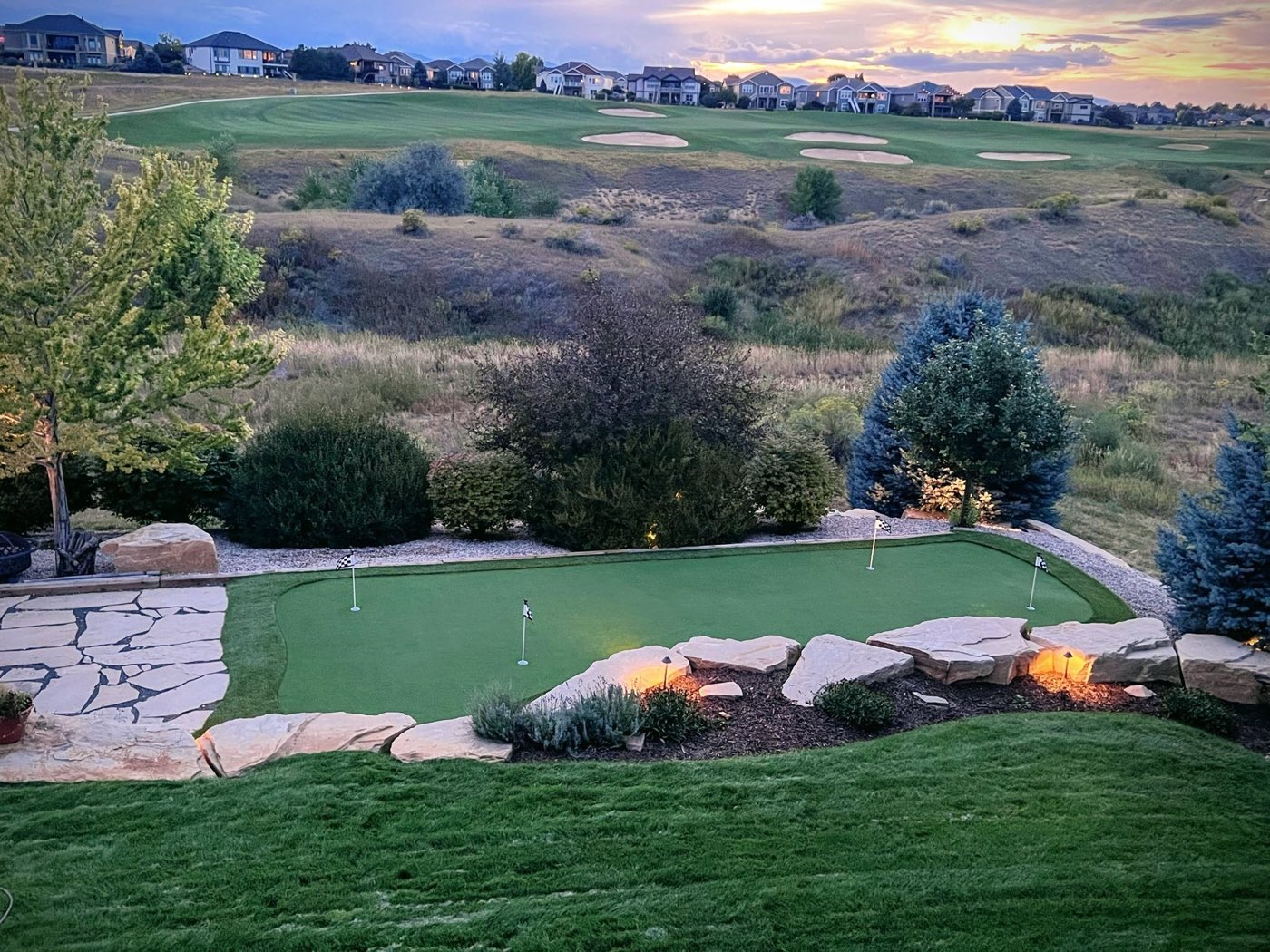
How do you maintain a backyard short-game area with a green, fringe, chipping zone and tee line?
A short-game area works as one system: the fringe and collar catch debris that gets walked onto the green, the chipping zone loses sand fastest, and the tee line takes the hardest wear and collects broken tees. Working zone by zone, in the right order, keeps problems from moving from one to the next. TIMELESS Turf Restoration maintains full short-game areas across the Grand Strand, not just the green.
Key takeaways
- Fringe and collar debris tracks onto the green if it is not cleared first; always work outside in.
- The chipping landing zone loses infill sand faster than any other part of the area and needs checking most often.
- A tee line or hitting strip takes the heaviest wear and collects broken tees that can scratch nearby turf.
- For the single-green routine on its own, see our putting green care schedule; this page covers the whole area.
What each zone does, and how it fails
- The green. The actual putting surface. Fails the way any green does: sand migrates or compacts, fibers mat, speed drifts. Our putting green care schedule covers that routine on its own.
- Fringe and collar. The textured turf ringing the green. Its job is to slow a chip before it reaches the putting surface and take the foot traffic around every cup. Left unbrushed, it holds pine needles, leaf litter and pollen paste that then rides in on a golfer's shoes and lands on the green itself.
- Chipping landing zone. Where wedge shots come down short of the green. Repeated ball impact works sand out of this turf faster than anywhere else in the layout, and a thin patch here shows up as a bad bounce before it shows up as anything visible.
- Tee line or hitting turf. The strip golfers actually swing from. Takes the hardest wear of any zone and collects broken tees, which work into the fibers and can scratch or snag whatever turf they get dragged across next.
Order of work on a visit
Working the zones in the wrong order just moves the mess around. Clear and blow off the fringe and collar first, before it gets walked onto the green. Brush and check the chipping zone next, since sand loss there is the easiest thing to miss if you go straight to the green. Service the green itself third: brush, check the cups, top-dress if it is due. Finish with the tee line, sweeping loose tees and debris off it last so nothing gets tracked back across the other three zones on the way out.
Brian prices it by square foot before any work starts, and every job ends blown clean.
A weekly owner routine by zone
| Zone | Weekly task |
|---|---|
| Fringe & collar | Blow off debris; light brush against the grain |
| Chipping zone | Check for thin or bare-looking sand where shots land most |
| Green | Blow off, light brush; see the full care schedule for the rest of the year |
| Tee line | Sweep up broken tees; brush the hitting strip against the grain |
Where cross-contamination actually starts
Most of what looks like a green problem started somewhere else in the layout. Debris left on the fringe rides in on shoes and settles into the green's sand. A chipping zone gone thin wears unevenly in a way that is easy to miss until a shot from that exact spot behaves differently. If your short-game area includes a bunker, splash from a wedge shot carries coarse bunker sand onto the green, where it does not match the rounded, kiln-dried sand a green needs and can throw off both color and roll where it lands; brushing that out before it works in is worth doing right after any bunker practice. We do not build or install bunkers ourselves, that is a different trade, but we do clean and maintain the turf around one that is already there.
Mistakes that move a problem between zones
- Brushing the green first. Doing the putting surface before the fringe means whatever the fringe was holding gets walked back onto clean sand the moment someone crosses it.
- Treating the chipping zone as part of the lawn. A regular mow-and-blow pass skips the sand check a chipping zone actually needs, since nothing about it looks different from any other patch of turf until a ball bounces wrong.
- Ignoring broken tees. Left on the tee line, they get walked or blown onto the fringe and eventually the green, where a sharp edge can nick a fiber it never should have reached.
- Assuming one fiber, one routine. A green and its fringe are often two different turf types with two different care needs; our nylon vs. polyethylene care guide covers how that changes brushing and wear.
When to call us
For the single-green routine on its own, our backyard putting green care guide covers what damages a green and the weekly-to-annual schedule that prevents it. For the whole short-game area, call when any zone starts showing wear the others do not: a green that plays fine but a fringe that stays matted, a tee line collecting more broken tees than usual, or a chipping zone that has visibly thinned. Putting green restoration covers the green and fringe together and is quoted after a look at the whole area, typically landing in the same $299 to $899 range most backyard greens fall into; a tee line or hitting strip is treated as regular turf and priced from our standard square-footage bands.
Free quote, priced by square foot. You approve any add-on before we do it.