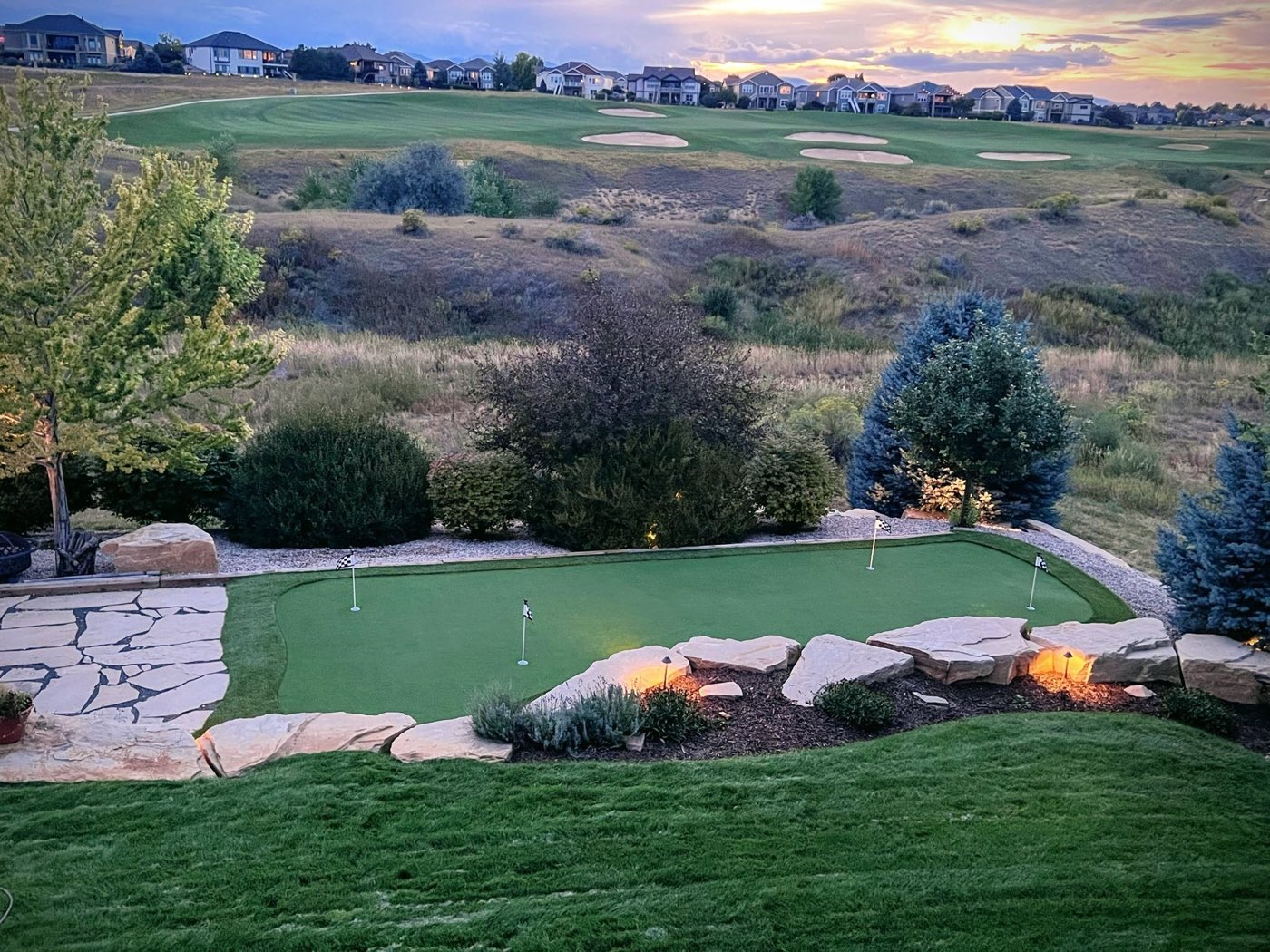
How do you get a backyard putting green ready for a party or putting contest, and back to normal afterward?
Restore the green a few days ahead so fresh sand has time to settle, pick a moderate speed for mixed skill, and keep chairs, tables, tents, drinks and smoking off the putting surface. Route guests across the fringe, not straight over the cups. Afterward: clear debris, treat spills before they draw ants, and redistribute sand in the traffic lanes. TIMELESS Turf Restoration services Grand Strand greens before and after events.
Key takeaways
- Time the restoration a few days ahead, not the morning of, so fresh top-dress sand has settled and rolled in before a crowd stands on it.
- A moderate speed plays better for a mixed group than the green's usual fast setting, especially right after a fresh top-dress and roll.
- Chairs, tables, tents, drinks and smoking all leave their own kind of mark on a putting surface; route people and gear across the fringe instead.
- The reset the next day is as much about sugary spills and worn traffic lanes as it is about picking up cups and cans.
Time it a few days ahead, not the morning of
Freshly top-dressed sand needs time to settle and a pass or two of normal walking before it holds up under a crowd the way it does under everyday use. Book the restoration three or four days before the event rather than the morning of, so the sand has settled and the green has already been walked once or twice under ordinary conditions. Doing it the morning of leaves loose sand that tracks onto shoes and shows footprints by the second guest; doing it too far ahead risks a pollen or rain event undoing the work before anyone arrives.
A speed for mixed skill, not your usual game
A green rolled and top-dressed for an event often plays faster than it does day to day, since fresh sand and a fresh roll are exactly what raises speed. For a mixed group, most of whom are not adjusting their stroke for a fast green the way a regular player would, a touch slower is the more forgiving choice; see our backyard green speed guide for the range most home greens play well in, and our page on a green that runs too fast for what happens to a first-time player when it does not. A real contest among players who know the game can run closer to normal; a family party or a kids' contest plays better slower.
Brian prices it by square foot before any work starts, and every job ends blown clean.
What stays off the putting surface
- Chairs, tables and tents. A table leg or a tent stake concentrates a person's full weight into a single point and leaves an indentation that takes a brush and a top-dress to lift back out. Keep all of it on the fringe or the lawn, not the green.
- Drinks. A spilled drink on the green does the same thing it would anywhere else on turf, and a sugary one draws ants and gnats if it is not caught, covered on our food and drink stains page.
- Heels. A stiletto heel is a table leg with a person's whole weight on it; keep them off the putting surface the way a real course would.
- Smoking. Keep it well away from the green; a dropped cigarette leaves a real burn, not something that brushes out, covered on our burn marks page.
Routing people, and moving cups and flags
Set the bar, the seating and the path from the house to the fringe, not across the middle of the green, so foot traffic concentrates on turf built to take it rather than the putting surface itself; our short-game area guide covers what the fringe is built to handle. For a contest with more than one hole, use whatever cup locations the green already has rather than cutting new ones, and move which cup is in play between rounds the same way a course rotates them, so wear does not concentrate at one collar for the whole event.
The reset the next day
- Debris first. Cups, confetti, broken tees and anything else left overnight, cleared before it works into the sand.
- Spills next. A sugary spill missed the night before is stickier and more likely to have drawn ants by morning; treat it before it sets rather than after.
- Sand redistribution. Whatever lane guests walked all night is where sand packs down first; a light brush and top-up evens it back out.
- Spot enzyme where pets were. If a dog was part of the party, treat that spot with an enzyme treatment rather than waiting for a smell to show up on a humid morning.
What it costs
The restoration that gets a green ready for an event is priced the same as any other visit: a typical backyard green lands in the $299 to $899 range, quoted after a look. A spot pet treatment after the party runs $50 to $100 depending on how much of it there is. If a heel or a dropped ember actually damaged the surface rather than just marking it, a repair runs from $175 for an edge or $250 for a seam or patch. For a business hosting events on a regular calendar rather than a homeowner's one-time party, our event venues and wedding lawns page covers that side of the work.
Free quote, priced by square foot. You approve any add-on before we do it.