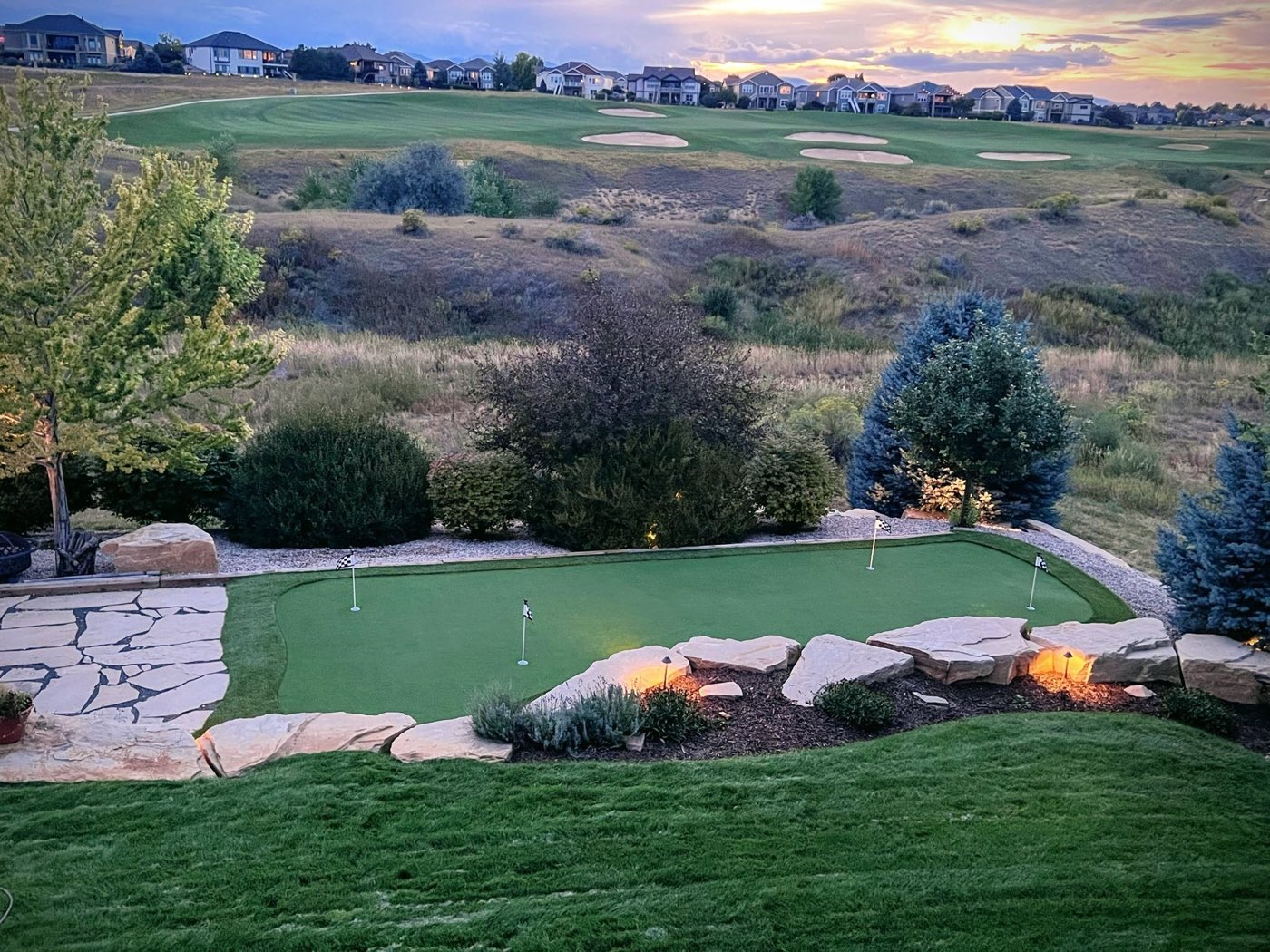
What speed should a backyard putting green run, and how do you measure it?
A Stimpmeter rolls three balls from the same release point down a ramp and measures how far they travel, averaged across two directions; that is how courses put a number on speed. Most backyard greens play well somewhere in the 8 to 12 foot range, slower on greens with more slope so putts can actually stop. TIMELESS Turf Restoration checks and resets speed on greens across the Grand Strand.
Key takeaways
- A Stimpmeter measures speed by averaging how far three balls roll in two directions from the same spot, a method that works on any green, synthetic included.
- Public course speeds usually run 8 to 10 feet; most backyard synthetic greens play well somewhere between 8 and 12, slower on a green with real slope.
- You do not need a Stimpmeter to track your own green: a consistent release point, rolled both directions and averaged, does the same job.
- Logging readings a few times a year catches a slow drift before it is obvious on every putt.
What a Stimpmeter measures
A Stimpmeter is a small ramp that releases a golf ball from the same point every time, so a green's speed can be compared apples to apples from one visit to the next. The standard procedure finds a flat stretch of green roughly 10 to 12 feet long, rolls three balls from the same starting notch, and requires all three to land within about 8 inches of each other before the reading counts. That roll is repeated in the opposite direction on the same line, and the two distances are averaged into one number, in feet. The averaging matters more than either single number: a slope that helps the ball one way and holds it back the other washes out once both directions are combined, which is the point of doing it twice.
Typical speeds, and where a backyard green fits
Speed numbers vary more by who is playing than by any fixed rule. Public and municipal courses usually run somewhere around 8 to 10 feet; private clubs tend to sit a bit faster, closer to 10 to 12; tournament setups push past that. None of that is a target your backyard green has to chase.
| Setting | Typical stimp reading |
|---|---|
| Public or municipal course | ~8-10 ft |
| Private club | ~10-12 ft |
| Tour or championship setup | ~11-13+ ft |
| Well-built backyard synthetic green | ~8-12 ft, depending on build and slope |
Treat these as reference points, not a number to chase. The right speed for your green is the one that suits its slope and who actually plays on it, which is next.
Brian prices it by square foot before any work starts, and every job ends blown clean.
Picking the right target for your green
Slope changes what a workable speed is more than any table does. A green with real break needs to run a touch slower than a flat one, or putts that catch the fall line will not stop short of the fringe; the more contour built into a green, the more this matters. A green built mainly for family use and short chip-and-putt games plays better a little on the slow side, since a forgiving pace keeps first-time golfers and kids in the hole instead of three feet past it. A green built for serious practice, reading break, working on speed control, benefits from running closer to what the builder's own home course actually plays, so the practice transfers. Neither target is wrong; match the number to how the green gets used.
A DIY way to check speed without a Stimpmeter
Our putting green care schedule guide covers a quick version of this: roll a few balls from the same mark and watch for drift or a duller pace. To go further, build a simple version of the ramp itself. Prop a straight board or a length of pipe at a consistent angle against something solid, mark a release point partway up, and let three balls go from that same mark every time rather than tossing them by hand, which changes the starting speed more than it seems like it should. Roll from one direction and measure to where the three balls settle, then flip the setup and roll the same three balls from the opposite direction on the same line. Average the two distances in feet, and that is your number, close enough to compare visit to visit even without an official Stimpmeter.
Logging readings through the year
A single reading tells you the speed today. A log tells you whether the green is drifting, and in which direction, well before it shows up as a missed putt. Note the date, both directional distances, the average, and anything relevant: a recent top-dress, heavy pollen, a hard rain the day before.
| Date | Roll one | Roll two | Average | Notes |
|---|---|---|---|---|
| March | 8'2" | 8'6" | 8'4" | Before pollen season |
| June | 7'1" | 7'4" | 7'3" | Sand looks low, due for a top-dress |
| October | 8'8" | 9'0" | 8'10" | After the annual top-dress |
When to call us
If your log shows the average creeping down putt over putt, month over month, that is usually low or compacted sand rather than a problem with the turf itself; see why a green rolls slow or bumpy for the mechanism. Top-dressing yourself can buy time between visits. Putting green restoration resets sand depth and speed together and is quoted after a look at your green; a typical backyard green lands in the $299 to $899 range most of ours fall into. If your green already runs too fast for its slope rather than too slow, see what to do when a green runs too fast instead.
Free quote, priced by square foot. You approve any add-on before we do it.