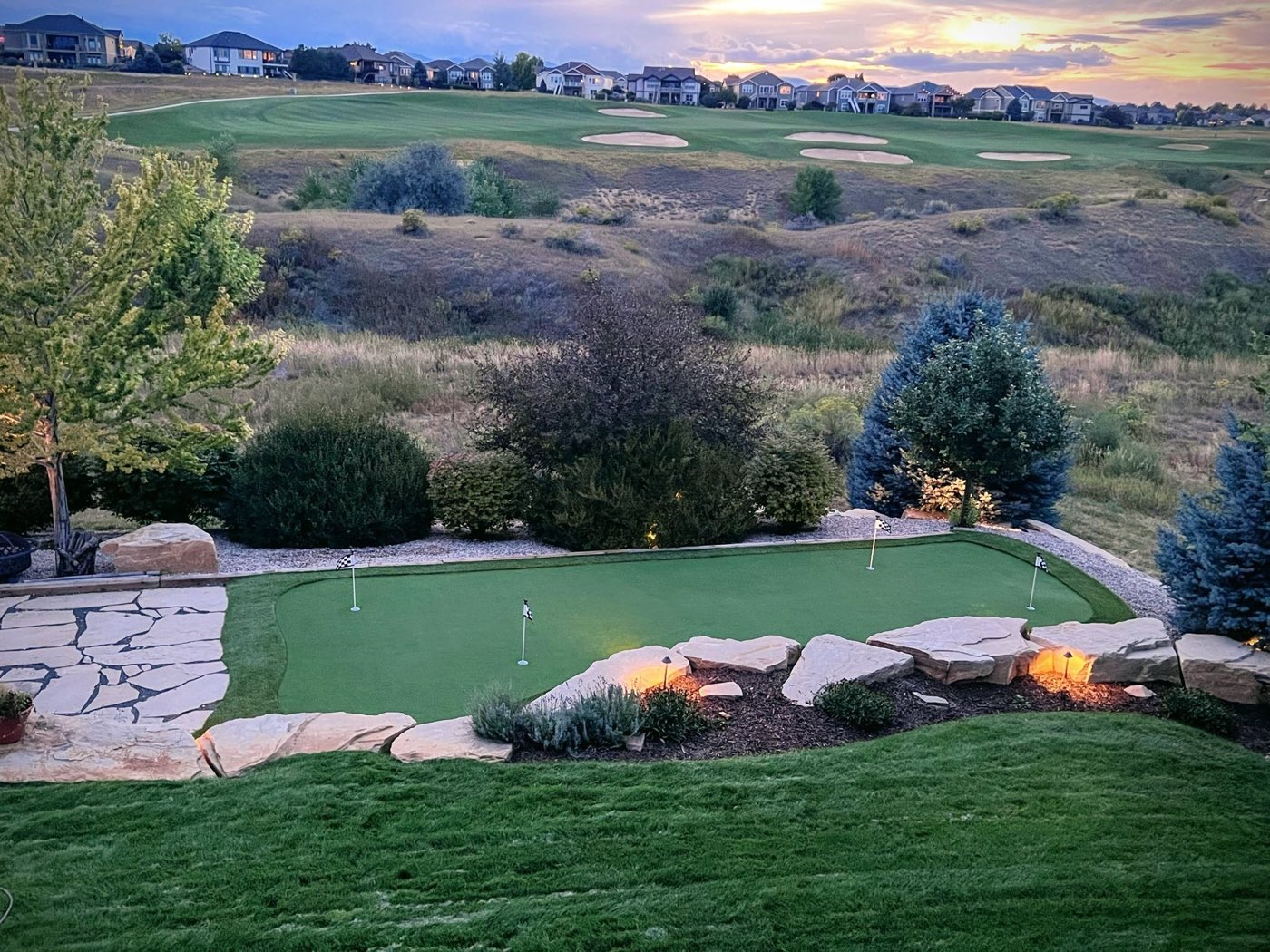

Why is my synthetic putting green running too fast?
A synthetic green runs too fast because the sand infill has been over-compacted or over-rolled, a fresh top-dress was packed down hard, midsummer heat has dried and firmed it, or too little fiber stands above the sand to slow the ball. Brushing to loosen the pile, a lighter roll and a sand adjustment bring it back down. TIMELESS Turf Restoration corrects green speed across the Grand Strand after inspecting it.
Key takeaways
- Speed problems usually stack: compacted sand, a hard-rolled top-dress, summer dryness and thin fiber cover all push a green the same direction.
- A simple roll test from a fixed spot tells you whether the whole green is fast or just one recently worked section.
- Brushing against the grain loosens the surface faster and more safely than adding water or skipping rolling altogether.
- A green that has not been professionally top-dressed in a year or more is the usual candidate for a full reset.
What speeds a green up past where it plays well
On a sand-filled green the ball rolls across the sand as much as the fibers, so speed depends on how firm, deep and even that sand is. A surface that used to hold a putt gets too fast for a few common reasons: the sand has been compacted by repeated rolling or heavy use until it plays like a hardpan; a top-dress was rolled in too hard right after it went down, before it had a chance to settle; midsummer heat has dried the sand out, and dry sand packs firmer than damp sand; or there simply is not enough fiber standing above the sand anymore to create the friction that slows a rolling ball. Most home greens run into a combination of these rather than one clean cause, which is why the check below matters more than guessing.
Check which cause you have
Before changing anything, roll a few balls from the same spot at the same release speed and watch where they stop. A green that plays fast everywhere and feels hard underfoot points to overall compaction or dryness. A green that is only fast on the section rolled most recently, or right after a top-dress, points to that pass being packed too hard. Parting the fibers with a finger and finding sand right up near the tips, with almost nothing standing above it, points to thin fiber cover rather than compaction. Our page on measuring backyard green speed walks through a repeatable roll test if you want a number to track over time instead of a guess.
Brian prices it by square foot before any work starts, and every job ends blown clean.
What corrects it
Loosening comes first: a stiff brush worked hard against the grain lifts the fibers and breaks up the top layer of compacted sand without pulling it out. If the green was rolled hard right after a top-dress, brushing alone often restores enough fiber height to slow the ball back down. Where sand is simply riding too high for the fiber length, a sand adjustment during the next scheduled visit rebalances the ratio. Rolling is not skipped afterward, it is done lighter and less often, since the goal is an even, settled surface, not a compacted one.
Matching the fix to the cause
| Cause | How it shows | What corrects it |
|---|---|---|
| Sand over-compacted or over-rolled | Firm everywhere; balls barely slow anywhere on the green | Brush against the grain to loosen the top layer, then roll less often and lighter |
| Fresh top-dress rolled in too hard | Fast only on the section rolled most recently | Brush to lift fiber; let a new top-dress settle before rolling it again |
| Midsummer dryness | Speed creeps up during dry stretches, eases after rain | Brush more through the dry spell; a scheduled top-dress resets it if it does not ease |
| Too little fiber above the sand | Parting the pile, sand sits right at the fiber tips | Sand depth is adjusted so more fiber stands above it |
Not the same problem as slow or bumpy
A green that is too fast is the opposite of one that has gone slow or bumpy, and it is worth not confusing the two. Slow and bumpy usually mean debris, pollen or thin, uneven sand; too fast usually means the sand is too firm, too dry or riding too high. If your green does both, faster in one section and duller in another, our page on greens that roll slow or bumpy covers the other half of that picture rather than repeating it here.
When to call, and what it costs
A homeowner with a stiff brush can correct a lot of this without help: brushing against the grain is safe to do often and rarely makes anything worse. Call when brushing does not bring the speed down after a couple of tries, when the green has not been professionally top-dressed in a year or more and feels uniformly hard, or when you want the surface measured and set to a specific feel rather than adjusted by guess. A putting green restoration checks sand depth, brushes and rolls to an even result and is quoted after inspection; a typical backyard green lands in the same range covered on our restoration cost page, roughly $299 to $899 by size and condition.
Free quote, priced by square foot. You approve any add-on before we do it.