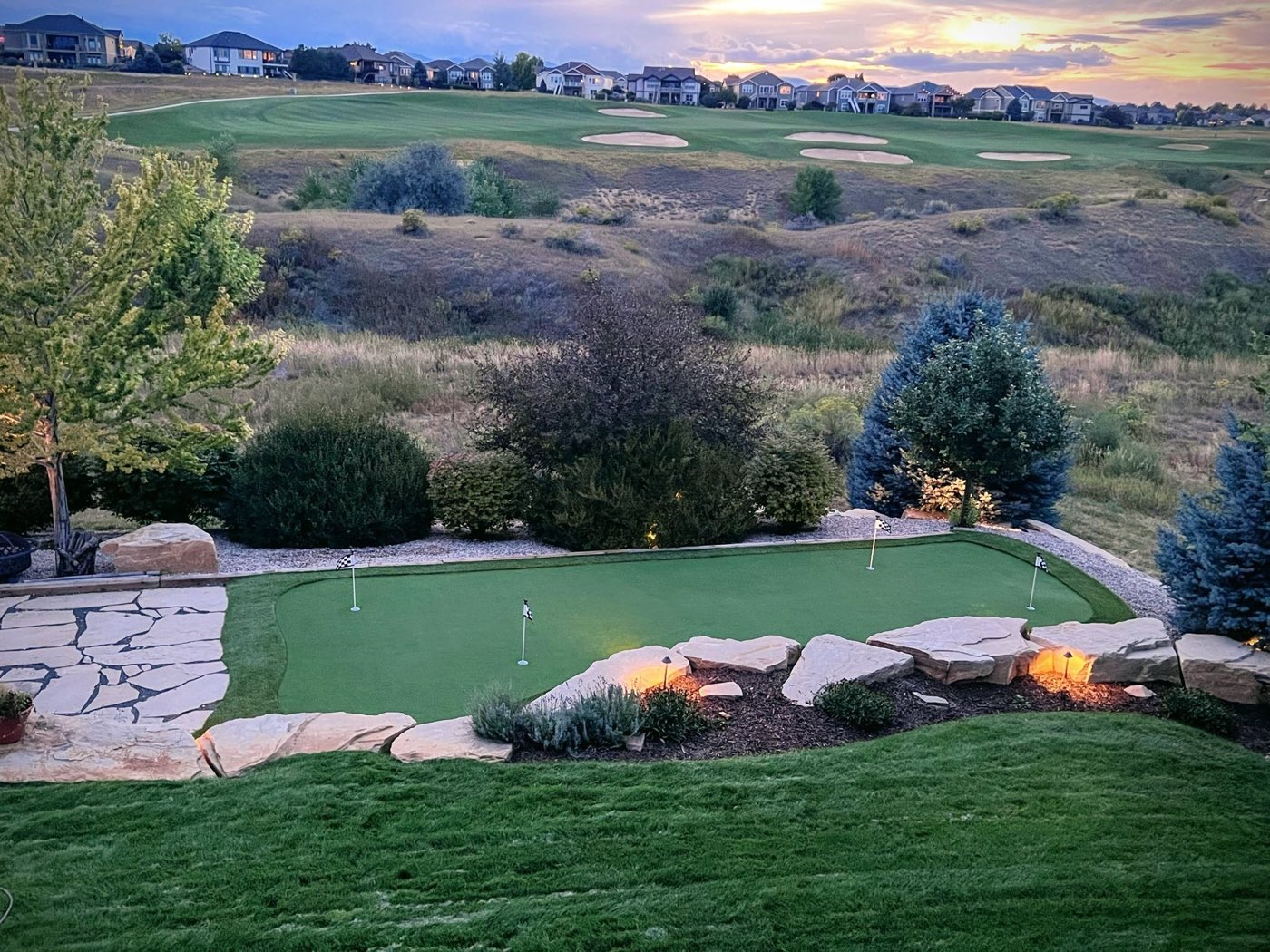
Why does my synthetic putting green look fuzzy?
A fuzzy green usually means fiber tips have frayed and split, sand has dropped too low to support the fibers, traffic has concentrated wear in one spot, or the wrong brush has been used on it. Top-dressing to the right depth and brushing with a proper green brush corrects most of it; fibers that are genuinely worn out need resurfacing instead. TIMELESS Turf Restoration diagnoses which across the Grand Strand.
Key takeaways
- Fraying, low sand, concentrated traffic and the wrong brush all read as the same fuzzy surface.
- A stiff, correct-bristle brush lifts fibers; a wire brush or improvised tool shreds them further.
- Fuzzy is a fiber problem; matted, flattened paths are a different one with a different fix.
- Sand depth restores support fast; fiber tips that have actually frayed apart do not grow back.
The four usual causes of a fuzzy surface
Fuzz on a putting green comes from a few different mechanisms, and more than one is usually at work at once. None of them mean the green is failing outright, but left alone they compound, since exposed, split fiber wears faster than fiber that is properly supported and groomed.
- Fiber fraying. Every synthetic fiber wears with use, and most putting-green fibers are designed to split slightly at the tip as they age, a process usually called fibrillation. A little is normal; a lot catches light unevenly and looks fuzzy rather than smooth.
- Sand riding too low. Fibers are meant to stand mostly supported by sand around their base. Where sand has thinned, more of the fiber stands exposed and unsupported, and it splays rather than lying flat.
- Concentrated traffic. The spot where golfers always stand to putt, or where a chair sits, wears faster than the rest of the green and fuzzes out first.
- The wrong brush. A stiff push broom, a wire brush or a leaf rake meant for a lawn shreds fine putting-green fiber instead of grooming it.
Fuzzy is a different problem from matted
A fuzzy green has fibers standing up but splitting or frayed at the tip. A matted green has fibers lying flat and shiny in a walking path, from being bent the same direction over and over. The two look similar from a distance, both dull the surface, but the fix is different: fuzzy fiber is groomed and supported, matted fiber is brushed back upright. If your problem is really flat, shiny paths rather than a fuzzy texture, our page on matted, flattened walking paths covers that case directly rather than repeating it here.
Brian prices it by square foot before any work starts, and every job ends blown clean.
Check which you have
Run a hand flat across the surface. Fiber that is upright but rough and catches on your palm, almost like corduroy, is fraying. Fiber that lies down smooth and shiny in one direction is matting, not fuzz. Do this on a dry day rather than right after rain, since damp fiber tends to lie down and can look less fuzzy than it actually is. Then part the fibers at the fuzzy spot and look at the sand line: if it sits well below where you would expect against the fiber height, that spot is thin on sand. Compare the fuzzy area to a low-traffic corner of the same green; a big difference in feel between a well-used stance and an untouched corner points to concentrated wear rather than a green-wide problem.
The fix: sand depth and the right brush
Where sand has thinned, top-dressing that spot back to the correct depth gives the fibers something to stand against again, which is most of the cure for fraying that traffic has made worse. Grooming with a brush built for synthetic turf, not a wire brush, a metal rake or a stiff yard broom, lifts and aligns fiber without tearing at the split ends. Most home greens hold up well with this pass done on a regular seasonal schedule rather than only once fuzz becomes obvious, since catching thin sand early is easier than correcting it after fiber has already frayed.
When brushing does not bring it back
A green that has been top-dressed and groomed correctly but still looks fuzzy, especially if the fiber has gone thin or pale as well, has probably worn past what grooming can fix. That is a fiber-life question rather than a maintenance one, and our page on restoring or resurfacing an older green walks through how to tell the difference and what each option involves.
When to call, and what it costs
Keep grooming with the right brush between visits; it is the one thing that helps every cause on this page a little. Call when a fuzzy spot does not improve after grooming, when sand depth looks uneven across the green, or when you want the whole surface top-dressed rather than one stance regroomed. That is a putting green restoration, quoted by size and condition after we look at it, typically in the same $299 to $899 range most backyard greens land in.
Free quote, priced by square foot. You approve any add-on before we do it.